


Recognised at the inaugural Inclusive Finance Industry Awards for its rapid growth as a non-deposit-taking credit provider, ASA Kenya has built its expansion around a model designed to take formal credit deeper into underserved communities. Thirteen years after entering the Kenyan market, the lender is combining high-touch lending, responsible credit, financial literacy and digital transformation as it scales its reach across the country

Financial inclusion is often measured by the number of people who gain access to formal financial products and services. But for institutions operating closest to underserved communities, the more important question is what happens after that access is secured. Does the financing help a business grow? Does it create employment? Does it strengthen a household’s ability to educate its children? Does a customer who once needed a small loan eventually become capable of managing a substantially larger enterprise?
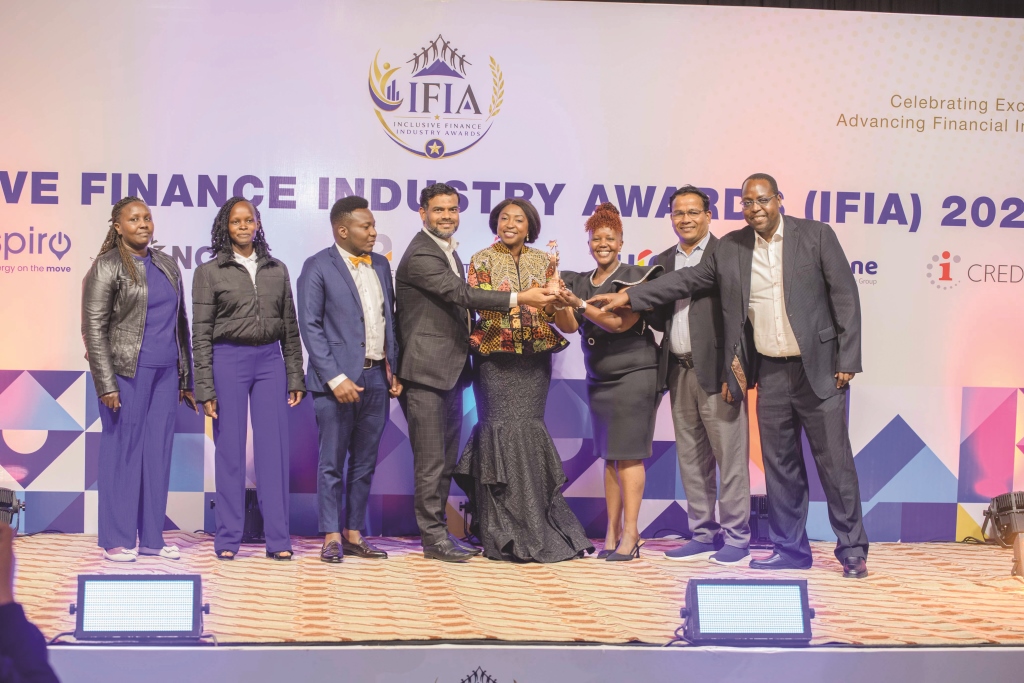
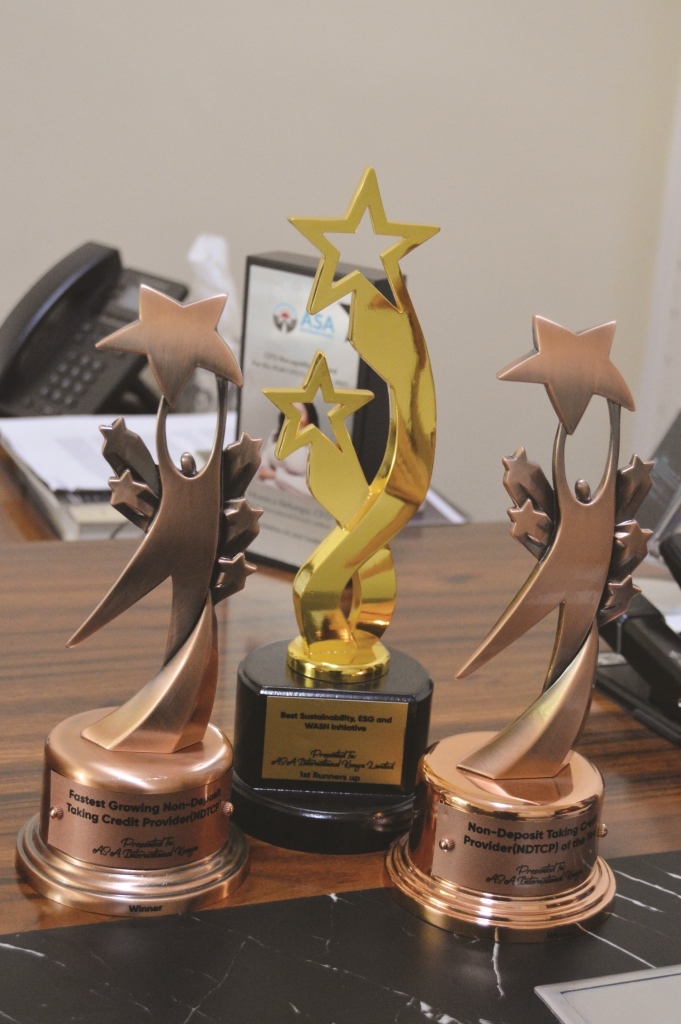
For ASA Kenya, these questions sit at the centre of its business model and provide the context for its recognition at the inaugural Inclusive Finance Industry Awards (IFIA) 2026, where it emerged the Fastest Growing Non-Deposit Taking Credit Provider and Non-Deposit Taking Credit Provider of the Year. For the institution, the recognition is a validation of thirteen years of building a financial model around customers who have historically remained outside the reach of conventional banking.
Monicah Wangeci Ndungu, the Chief Finance Officer of ASA Kenya, describes the recognition as both exciting and humbling. More importantly, she sees it as evidence that the institution’s approach is creating the kind of impact it set out to achieve.
The awards, she says, reflect the contribution of the teams working directly with customers as well as those supporting the business behind the scenes. They are therefore a recognition not only of innovation in product development, but of a model that depends heavily on proximity, discipline and an understanding of the customer.
ASA’s proposition has been built around a simple but demanding idea: reach people who traditional banking products do not adequately serve, understand their businesses closely and provide financing that corresponds to what they can realistically manage. The result is a model that remains intensely human even as the institution prepares for a significant digital transition.
A model built for the underserved
ASA International Kenya Limited is part of ASA International Group, with subsidiaries across Africa and Asia. Its Kenyan operation began in 2013 with a core mission of providing finance to people at the base of the economic pyramid who do not have access to mainstream banking. Thirteen years later, that footprint has expanded considerably.
Significantly, the institution has more than 340,000 customers and 172 outlets countrywide. It operates in 38 of Kenya’s 47 counties. Additionally, at 99%, its customer base is overwhelmingly female. The focus on women according to Ndungu is deliberate.
For ASA, reaching a woman who runs or supports a household business can have an impact that extends beyond the individual borrower. Ndungu explains that targeting women creates a wider household reach because women often play a central role in supporting children and other members of the family. Yet women also face some of the structural barriers that make conventional borrowing difficult, particularly limited access to collateral and property held in their own names. ASA’s model addresses that challenge through lending that does not require traditional collateral.
Its core products include small business loans, small loans and educational loans, with an average disbursement of around KSh30,000. These are deliberately positioned at a level intended to serve customers who might otherwise struggle to access conventional formal banking products.
The significance of the two recognitions lies in the scale and trajectory of that model. ASA’s growth has been built around extending relatively small amounts of formal credit to customers who have historically faced barriers to conventional finance, and then supporting their progression through successive lending cycles.
The high-touch difference
In an increasingly digital finance business environment, ASA’s defining feature is almost counterintuitive: proximity. The institution operates a group-based model in which customers are organised into groups of between fifteen and twenty members. The group provides a social guarantee, while members are expected to know one another and have knowledge of where their colleagues live and operate. This is supported by a high-touch relationship between loan officers and customers.
Loan officers interact with customers regularly, conducting verification, monitoring businesses and assessing repayment capacity. The institution also operates several levels of supervision, including branch, regional, divisional and zone management. It is labour intensive. But ASA views that intensity as part of its competitive advantage. “It’s quite labour intensive, but it gives us the satisfaction that we are able to, we are very close,” Ndungu says when describing the institution’s relationship with its customers.
That closeness has a practical function. Regular interaction enables loan officers to identify emerging difficulties, understand changes in a customer’s circumstances and ensure that the amount borrowed remains appropriate to the business. It also strengthens the institution’s understanding of character and repayment behaviour. In a group setting, members know one another, and the social structure creates another layer of visibility around borrowing. The result is a form of credit assessment that relies not only on conventional financial information, but also on repeated interaction and local knowledge.
Responsible lending at the centre
The philosophy is ultimately about right-sizing credit. ASA does not want customers to borrow more simply because they qualify for more. Its loan officers are expected to conduct detailed appraisal and verification before determining what a business can comfortably handle. That principle becomes particularly important as customers graduate from one loan cycle to another.
Ndungu observes that most customers initially receive Kshs. 10,000 and, after several cycles, qualify for Kshs. 100,000. The larger facility can potentially enable a business to create employment, expand operations and increase its reach. But growth is not pursued blindly.
ASA’s customer relationships allow loan officers to observe when a business is ready for a larger facility and when it is not. A customer may be hesitant to take a larger loan, preferring to borrow Kshs. 50,000 and return for another Kshs. 50,000 later. Through appraisal, the institution may determine that the business can comfortably support Kshs. 80,000 and encourage the entrepreneur to use the larger facility to expand. This is where the institution’s understanding of inclusion becomes more sophisticated.
The objective is not simply to increase the number or size of loans. It is to enhance the economic capacity of the customer without creating a debt burden that the business cannot sustain. ASA says its portfolio at risk is currently below 0.3 per cent, while its loan portfolio stands at more than Kshs. 7.3 billion and its asset base at Kshs. 10 billion. These figures, alongside its growing customer base, illustrate the scale at which the model is now operating.
Capacity Building: Finance Beyond Credit
For ASA, credit represents just one facet of the client relationship. The institution embeds capacity building directly into its lending framework, starting with group leadership—training the chairlady, secretary, and treasurer of each group in effective governance.
This is coupled with rigorous financial literacy instruction covering basic record-keeping, margin analysis, and profit tracking, equipping entrepreneurs to manage capital effectively. Through strategic partnerships, ASA also delivers specialized training in climate-smart agriculture and post-harvest management.
Beyond enterprise development, ASA extends its reach through targeted CSR initiatives—including educational support, disaster relief, school water storage, and tree-planting projects—reflecting a holistic client model that extends far beyond loan accounts.
The Digital Shift
While physical touchpoints remain foundational, ASA is executing a major digital transformation to optimize reach and operational efficiency. Moving from an in-house banking setup, the institution is deploying the T24 core banking system alongside a Digital Financial Services (DFS) application slated for full rollout in 2027.
To safeguard financial inclusion, ASA is implementing a dual-channel strategy featuring both smartphone app and USSD access, ensuring feature-phone users are not left behind. The platform will support automated loan disbursements and repayments via partners like M-Pesa. As Ndungu bluntly notes: “If you don’t innovate, then you’ll be taken over by events.”
This transition will fundamentally expand operational efficiency. Today, a loan officer manages 350 to 400 clients; with self-onboarding and digital applications via the DFS platform, officer capacity is projected to surge to between 600 and 1,000 clients. The strategic goal is to merge the trust of ASA’s high-touch model with the scale and speed of modern digital infrastructure.
Taking the Model Across Kenya
ASA currently operates in 38 counties and has identified the remaining parts of the country as part of its growth agenda. Northern Kenya is particularly significant. Ndungu acknowledges that some people remain sceptical about the potential of the region, but says ASA sees opportunity in the businesses operating there and intends to reach women in those markets.
The institution expects to expand into the areas it has not yet reached over the next three to five years. Technology will be central to making that expansion commercially viable. The institution already has more than 900 loan officers, with individual officers visiting dozens of customers each day. Extending this model across the country purely through physical expansion would inevitably place greater demands on personnel and infrastructure.
Digital onboarding and servicing provide an opportunity to extend reach without removing the human element entirely. That balance could prove critical. ASA’s strength has historically been its closeness to customers; its next challenge is to scale that closeness without allowing growth to dilute the quality of the relationship.
The Customer as the Measure Of Growth
This is where the significance of the award becomes most visible. For ASA, growth is not simply about the number of customers or the size of the loan book. Ndungu describes the institution’s impact through the progression of individual borrowers: someone who enters with a Kshs. 10,000 facility and, after several loan cycles, reaches Kshs. 100,000.
The financial progression represents something larger. It can mean a business expanding its customer base, creating employment or moving into a more substantial level of operation. It can mean a parent gaining greater ability to pay school fees. It can mean a customer who once had very limited access to formal finance becoming a repeat borrower with an established business history. That is the impact ASA wants its growth to represent. And it explains why the institution places such emphasis on its loan officers.
They are the people who translate the model into practice every day, visiting customers, assessing businesses, monitoring repayment, identifying challenges and building relationships. The award, in that sense, belongs as much to the frontline teams as it does to the institution itself.
A business built on relationships
There is another dimension to ASA’s model that becomes increasingly important as financial services become more automated: trust. The institution describes itself as a family, built around weekly interaction between customers and loan officers. That frequency creates a relationship that is difficult to replicate through purely transactional banking.
Customers do not simply return because they need another loan. Many have remained with ASA through multiple loan cycles, with some completing more than twenty cycles. For the institution, that repeat relationship is evidence that its model is delivering something beyond a financial transaction.
It is also a source of insight. Customers increasingly ask for larger tickets and additional services, including savings facilities that ASA, as a non-deposit-taking microfinance institution, is not permitted to offer under its current license. Their requests provide an indication of how customer needs evolve as businesses grow.
The challenge for ASA is therefore becoming more complex: it must preserve the relationship that built its customer base while expanding the range and sophistication of services it can offer.
What the Recognition Says About ASA’s Growth
The two IFIA recognitions mark a pivotal moment in ASA Kenya’s 13-year journey. The institution now serves over 340,000 clients across 38 counties, supported by 172 outlets and more than 900 loan officers. This expansion reflects two converging strengths: the foundational ASA model, women-focused micro-lending, manageable installments, social guarantees, and capacity building, and an emerging digital architecture designed to enhance onboarding, officer capacity, and national reach.
The strategic imperative is integrating these digital capabilities without sacrificing the high-touch engagement that drives client trust. Expressing appreciation to ASA’s client base, CEO administrative leadership encourages existing borrowers to scale into larger facilities through proper appraisal while bringing other women entrepreneurs into the ecosystem.
Ultimately, the IFIA awards validate a client-centric trajectory, measuring progress not merely by institutional scale, but by the evolution of micro-borrowers into sustainable enterprises as ASA expands nationwide.


