


As pension assets and collective investment schemes expand, independent credit assessments are emerging as a critical tool for strengthening investor confidence, improving risk evaluation and supporting more informed capital allocation

By June 30, 2026, pension assets under management regulated by the Retirement Benefits Authority (RBA) had reached Kshs. 3.2 trillion, while assets held in collective investment schemes (CIS) regulated by the Capital Markets Authority (CMA) stood at Kshs. 948.7 billion. Together, the two segments represented approximately Kshs. 4.15 trillion in assets.
The expansion reflects the growing importance of professionally managed investments in Kenya’s financial sector. It also raises the stakes for those responsible for allocating capital, particularly as investors seek returns across money market funds, corporate debt and other fixed-income instruments.
Against this backdrop, the reliability of financial information, the assessment of borrowers’ creditworthiness and the ability to identify emerging risks are becoming increasingly important to investment decision-making. These issues took centre stage during an executive breakfast session convened by pan-African credit rating agency Agusto & Co., in partnership with the Fund Managers Association (FMA) and the Kenya Association of Stockbrokers and Investment Bankers (KASIB), at the Radisson Blu Hotel in Upper Hill, Nairobi.
The discussions brought together industry leaders and market participants to examine how independent credit assessments, fund ratings and stronger risk management practices can support the development of Kenya’s capital markets.
Growth Brings Greater Responsibility
For Fred Mburu, Chief Executive Officer of the Fund Managers Association (FMA), the expansion of investment assets must be matched by stronger safeguards for investor confidence. He argued that sustainable capital market growth depends not only on the availability of investment opportunities, but also on the quality of the information underpinning investment decisions and the ability of market participants to assess risks objectively. “Capital markets cannot grow sustainably without trust,” Mburu said, emphasizing the need for investors to have confidence in the professionals managing their money and in the information used to make investment decisions.
That confidence, he noted, depends on risks being identified, understood, priced and communicated appropriately. The message carries particular significance in a market where fund managers must balance return expectations against their obligations to protect investors’ interests. For pension schemes, whose investment horizons extend over many years, and collective investment schemes serving retail investors, inadequate credit assessment can expose portfolios to losses that undermine both performance and confidence.
Independent ratings can help address information gaps by providing an external assessment of the creditworthiness of issuers, the quality of investment portfolios and the capabilities of fund management institutions. However, Mburu cautioned against treating ratings as a replacement for the professional judgment of investment managers. “We at FMA see credit ratings, fund ratings, and investment-manager ratings as complementary services to the professional work that fund managers already do,” he said.
He stressed that ratings should not displace investment research, due diligence, risk management or the fiduciary responsibilities of fund managers. “A rating is useful, but it should never become a substitute for asking the right questions,” he added. Mburu also underscored the time-sensitive nature of credit assessments, noting that a rating reflects an informed opinion at a particular point rather than a guarantee of future performance.
Making credit risk easier to assess
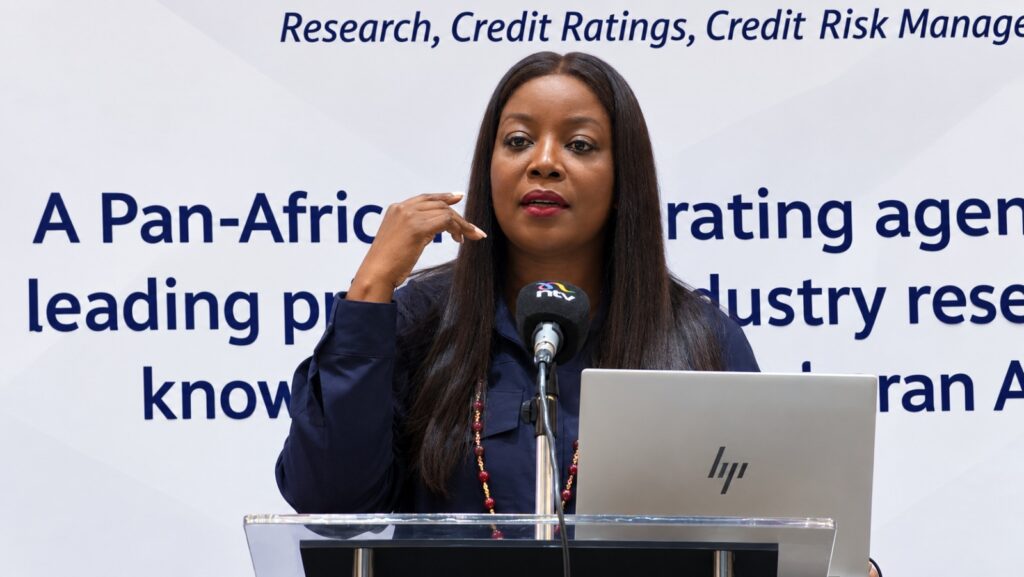
For investors assessing fixed-income opportunities, distinguishing between borrowers with different levels of credit risk can be challenging, particularly where financial information is limited or difficult to compare. Mrs Yinka Adelekan, Group Managing Director of Agusto & Co., highlighted the role of standardised credit rating frameworks in making risk assessments more accessible and comparable.
Credit ratings provide a structured way of evaluating an issuer’s capacity to meet its financial obligations. By translating complex financial and qualitative assessments into recognised rating categories, they help investors compare credit risks across different issuers and instruments. Adelekan highlighted the importance of established rating scales in distinguishing investment-grade exposures from those carrying higher levels of credit risk.
Such distinctions can inform portfolio construction, investment limits and the assessment of whether the potential return on an instrument adequately compensates for the risks involved. For fund managers, the implications extend beyond selecting individual securities. The credit quality of underlying assets can influence the resilience of an investment portfolio, particularly when market conditions deteriorate or borrowers face difficulties meeting their obligations.
This is especially relevant to collective investment schemes, including money market funds, which pool investors’ money and deploy it across a range of short-term and other eligible instruments. Although such funds are often associated with liquidity and relative stability, their underlying investments remain exposed to credit, liquidity and market risks.
A fund’s performance therefore needs to be considered alongside the quality of its underlying holdings and the strength of the processes used to manage those exposures.
Beyond borrowers
Fund quality ratings examine the quality of a fund’s underlying investments and its capacity to manage credit and liquidity risks. These assessments can provide investors with additional insight into the characteristics of a portfolio beyond its reported returns.
Asset manager ratings, meanwhile, focus on the institution responsible for investment decisions. They may examine governance arrangements, investment processes, risk management systems, operational controls and organisational stability.
The distinction is important. A fund may hold assets with relatively strong credit profiles, but the quality of its management processes remains relevant to how effectively it responds to changing market conditions. Conversely, a well-governed asset manager must still make sound investment decisions and maintain appropriate controls over the risks taken on behalf of clients.
A shared responsibility across the financial system
The participation of senior representatives from Kenya’s regulatory and investment fields reflected the wider significance of the discussion. Their presence underscored the interconnected roles of regulators, investment intermediaries, fund managers, pension trustees and independent research providers in supporting an effective investment ecosystem.
Regulators establish and enforce the frameworks within which market participants operate. Stockbrokers and investment bankers facilitate capital raising and investment transactions, while fund managers and pension trustees make allocation decisions on behalf of investors and beneficiaries. Credit rating agencies contribute independent assessments that can help market participants evaluate the risks associated with particular investments.
For investors, if they are promised that an offer will generate high returns for them, this should prompt them to examine the inherent risks, before spending their money. For fund managers, the challenge is to ensure that portfolio decisions remain grounded on research, appropriate risk limits and a clear understanding of their obligations to clients.
Building confidence in Kenya’s investment market
Independent credit research and fund assessments can contribute to a more transparent investment environment by giving market participants additional tools to evaluate risk. Their effectiveness, however, depends on being used alongside ongoing due diligence, sound governance and active monitoring of changing market conditions.
Mburu captured the practical importance of this approach in his closing remarks, using humour to reinforce the need for investors to take credit assessments seriously. He quipped : “They say there are two kinds of people in the financial markets: those who check the credit rating… and those who wish they had checked it earlier!” .
Ultimately, the strength of a Kshs. 4.15 trillion investment market will depend not only on how much capital it attracts, but also on how effectively that capital is evaluated, allocated and protected against avoidable risk.


