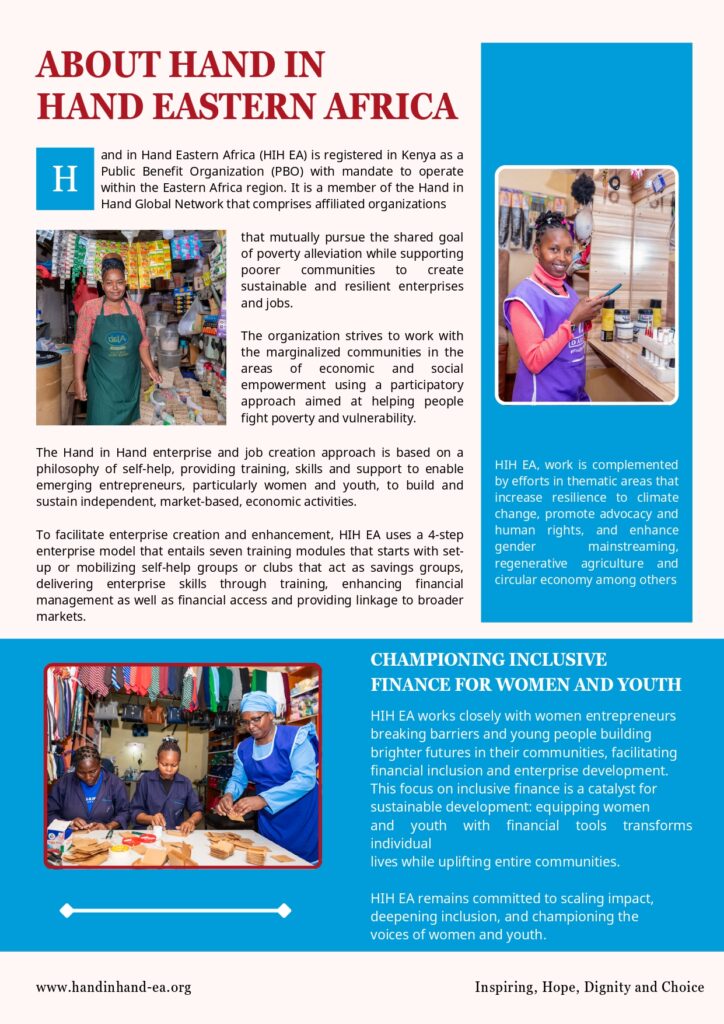
Its double victory at the inaugural Inclusive Finance Industry Awards recognised more than programmes targeting women and youth. Behind the accolades is an enterprise-development model that is attempting to change how low-income entrepreneurs access skills, capital, markets and the resilience needed to build businesses that last
At the inaugural Inclusive Finance Industry Awards (IFIA) 2026, the applause was for the winners, but the true significance of the evening went far beyond the trophies. Among the key institutions recognized was Hand in Hand Eastern Africa (HiH EA), which emerged with two major accolades: Best Women Economic Empowerment Initiative and Best Youth Inclusive Finance Initiative. The recognition not only placed women and young entrepreneurs at the centre of Hand in Hand Eastern Africa’s success story, but it also offered a window into something broader; a development model built around the firm belief that financial inclusion is only meaningful when access to capital is paired with the capabilities to use it effectively.
For Hand in Hand Eastern Africa, that distinction has shaped its mandate since it began operating in Kenya in 2010. Registered as a public benefit organisation, the institution has anchored its presence around micro and small entrepreneurs, particularly people operating at the lower end of the income spectrum. Its reach now extends across more than forty counties through twenty six operational sites, with interventions designed to integrate enterprise development, financial access, market linkages, and climate resilience. The recognition at the IFIA 2026 represented an industry endorsement of an approach that moves away from viewing poverty strictly through the lens of income, looking instead at the broader systems that keep micro-entrepreneurs from building sustainable livelihoods.
For Mr. Albert Wambugu, Chief Executive Officer of Hand in Hand Eastern Africa, the double win arrived as an unexpected moment of validation. The organization had not gone into the ceremony certain of victory. When the announcements were made, however, the response from his team reflected years of unpublicized effort on the ground.
“We were not aware that we had won. So the first thing was a pleasant surprise… but where I was, my team exploded in jubilation with measured confidence, knowing that we actually deserved it,” Mr. Wambugu recalls. That confidence was rooted in years of working directly with community-level entrepreneurs and refining an operational strategy that puts the real-world conditions of low-income households at the centre of project design.
Mr. Wambugu emphasizes that the organization’s approach is deliberately human-centred, recognizing that vulnerable demographics cannot be understood through standard banking products or rigid lending parameters. “We have contributed, and we keep on priding ourselves in saying that we target women, and we listen to them. We have a lot of human-centeredness in the way we design our projects,” he explains. That philosophy forms the backbone of the organization’s work and explains how it has managed to build lasting traction in places traditional financial services rarely reach.
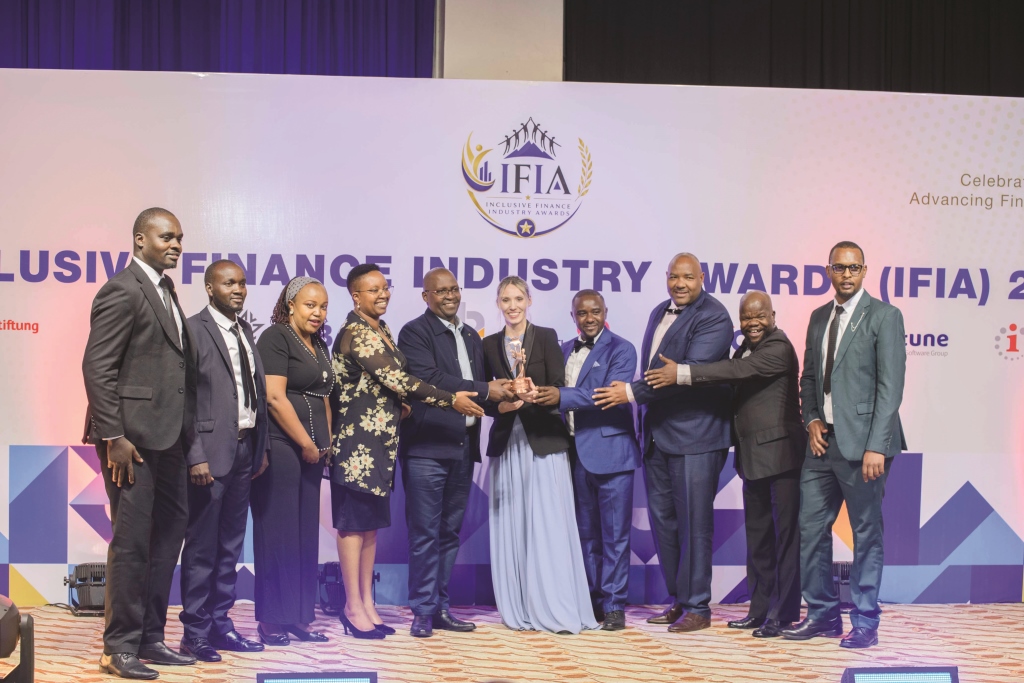
Beyond the traditional loan model
For decades, mainstream discussions surrounding financial inclusion have focused on access—expanding the number of bank accounts, distributing credit, rolling out mobile payment gateways, and pushing digital channels. Yet access by itself does not automatically yield economic transformation. For a micro-entrepreneur operating on razor-thin margins, capital is only one piece of a much larger puzzle. A business owner might receive a loan and still fail because they lack basic training in product pricing, cash flow management, separating household expenses from business accounts, identifying viable buyers, or cushioning their trade against sudden market shocks.
Hand in Hand Eastern Africa’s framework is engineered to address these gaps before and alongside any distribution of funds. The organization engages entrepreneurs through a structured four-pillar enterprise-development pathway that begins with community mobilization and practical business skills training, moves into group savings and structured financial access, and continues into market linkages, value addition, and long-term resilience. The entire journey is built to be a gradual transformation rather than a transactional touchpoint.
“If people start with us, they walk through a process,” Mr. Wambugu explains. “It is not a touch and go.” That distinction separates Hand in Hand Eastern Africa from traditional models where impact is measured primarily by loan disbursement volumes. For this organization, the critical evaluation begins after the capital reaches the entrepreneur’s hands.
To achieve this, entrepreneurs are mobilized into self-help groups and broader cluster networks. Within these peer structures, members build savings discipline, share experiences, and gain the confidence required to make sound business decisions. Training modules cover practical aspects of business administration, while structured mentorship and market connections help entrepreneurs transition beyond the initial friction of launching a business. Furthermore, interventions incorporate climate resilience, introducing techniques and clean technologies that reduce operational costs and protect households from environmental volatility. The model reflects a fundamental reality of informal business: the entrepreneur experiences finance, market dynamics, weather patterns, domestic responsibilities, and commercial risk simultaneously.
Women as the core engine of transformation
The heavy focus on women across Hand in Hand Eastern Africa’s portfolio is a deliberate response to structural economic realities. Across East Africa’s micro-enterprise sector, women constitute the backbone of local trade, agricultural production, small-scale food processing, and service enterprises. Yet their high participation rate in informal work has historically failed to translate into asset ownership, financial control, or strategic decision-making power.
Approximately 80% of Hand in Hand Eastern Africa’s total programme participants are women, while young people make up roughly 40 % , with significant demographic overlap between the two categories. These numbers demonstrate that women and youth are not treated as secondary beneficiaries; they represent the core target demographic around which the organization’s entire methodology is structured.
However, the deeper metric lies in what genuine economic agency looks like once a woman secures a stable income stream. Hand in Hand Eastern Africa’s operational experience shows that economic empowerment must cross the threshold into the household. To facilitate this, the organization utilizes tools such as the Gender Action Learning System (GALS), which brings household members together to discuss shared economic goals, financial planning, and workload distribution. The goal is to turn financial growth into a collective household endeavour rather than leaving women to navigate the pressures of enterprise expansion in isolation.
Mr. Wambugu notes that this joint approach often leads to broader social shifts within participating families. “Women say that domestic violence has reduced because they are not holding conversations about ‘when you said you bring money, why didn’t you bring it?’ The conversation changes to: ‘I have done this and I think I have solved this problem, maybe you can solve the other one,’” he shares.
The social implication is profound: income generation is one marker of progress, but a woman’s ability to direct that income, participate in domestic planning, and negotiate priorities with confidence marks a far deeper level of empowerment.
This integrated design also tackles one of the most stubborn structural barriers facing female entrepreneurs: collateral requirements. Traditional lending models demand formal titles to land or property, assets that cultural norms often keep out of women’s hands. By substituting formal asset requirements with peer-group discipline, financial training, and joint accountability, Hand in Hand Eastern Africa opens structured pathways for individuals who would otherwise remain locked out of formal credit markets. Inclusion, under this model, begins by diagnosing the exact cause of exclusion rather than issuing off-the-shelf financial products.
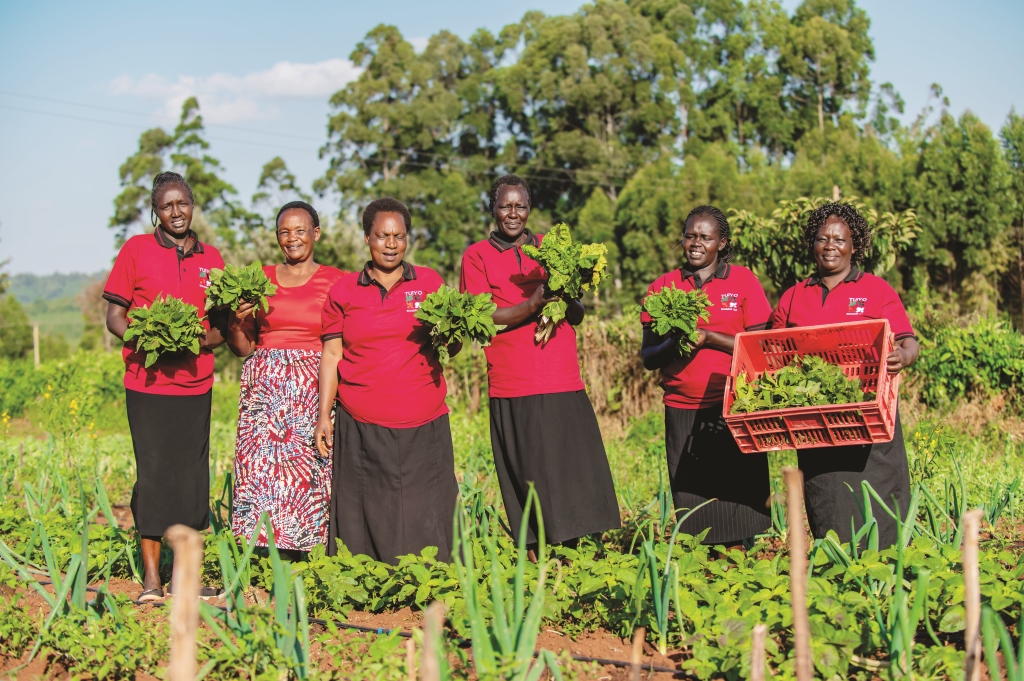
Building enterprise survival skills for youth
While women represent the foundation of the organization’s outreach, young entrepreneurs address a critical demographic urgency. Kenya’s population is overwhelmingly young, with roughly 75 % of citizens aged thirty five years and below. This youth bulge makes the performance of youth-led enterprises an urgent macro-economic imperative. Young people require sustainable employment, but they also require enterprises designed to survive past the initial launch phase.
To address this, Hand in Hand Eastern Africa has re-engineered enterprise education to make it practical, engaging, and directly applicable. Using gamified learning modules, interactive simulations, and real-world exercises, the organization simplifies complex commercial concepts like bookkeeping, profit-margin analysis, inventory management, risk mitigation, and insurance. The goal is to replace dry, classroom-style financial lectures with practical tools that a young business owner can apply immediately to their daily operations. Mentorship networks further connect young entrepreneurs with seasoned business mentors who offer guidance on navigating market dynamics, while strategic linkages connect them to larger trade networks outside their immediate neighbourhoods.
Mr. Wambugu frames the structural stakes of youth enterprise without sugarcoating the reality. “They say 80% of MSMEs will be out of business by their fifth year. They don’t see their fifth birthday. For us, we want it to be a place where we are able to treat and rescue them before they get to that level of dying,” he states.
His observation underscores a necessary pivot in development policy: launching youth businesses is relatively easy, but helping them navigate early-stage shocks is where long-term economic value is generated. Survival requires financial discipline, access to markets, operational agility, and the resilience to pivot when initial business assumptions encounter market realities.
Preparation Before Capital
Hand in Hand Eastern Africa enterprise approach extends directly into its lending philosophy. The organization rejects the notion that credit should be disbursed without extensive preparation. Entrepreneurs are required to complete structured business training and demonstrate a clear operational purpose before accessing micro-loans. Capital, the organization argues, is only effective when the recipient has a clear roadmap for deployment and repayment.
Mr. Wambugu challenges the common assumption that micro-entrepreneurs at the bottom of the pyramid represent an inherently risky borrower class. He argues that high default rates are often the result of financial providers failing to invest time in preparing and understanding their clients. “These people that we target are not as risky if you work with them,” he asserts.
Because of this, responsible borrowing principles are embedded throughout the programme. “We do not lend to somebody who has not gone through our training,” Mr. Wambugu emphasizes. “Credit for us must have an objective that is business-related or helps them save on household costs.”
This approach offers a striking contrast to the rapid spread of instant digital credit across East Africa. While digital micro-loans have made cash instantly accessible, they have also fueled high repayment default rates and over-indebtedness among low-income households. For a micro-enterprise, the difference between productive capital and predatory debt comes down to preparation. A loan used to buy wholesale inventory, acquire machinery, or expand operational capacity generates the cash flow required to settle the debt. The same loan, taken without a clear commercial strategy, quickly becomes a financial burden.
Hand in Hand Eastern Africa’s portfolio metrics validate this high-touch approach. To date, the organization has facilitated over Kshs. 1.6 billion in cumulative small loans, with average individual borrowing amounts ranging between Kshs. 10,000 and Kshs. 11,000. Despite serving low-income communities with no traditional collateral, Hand in Hand Eastern Africa maintains a portfolio default rate between just 1 per cent and 2 per cent, while historical loan write-offs remain capped at roughly 0.1 per cent. These numbers directly challenge the myth that high default rates are an inevitable cost of serving low-income markets, demonstrating that rigorous business preparation yields excellent credit performance.
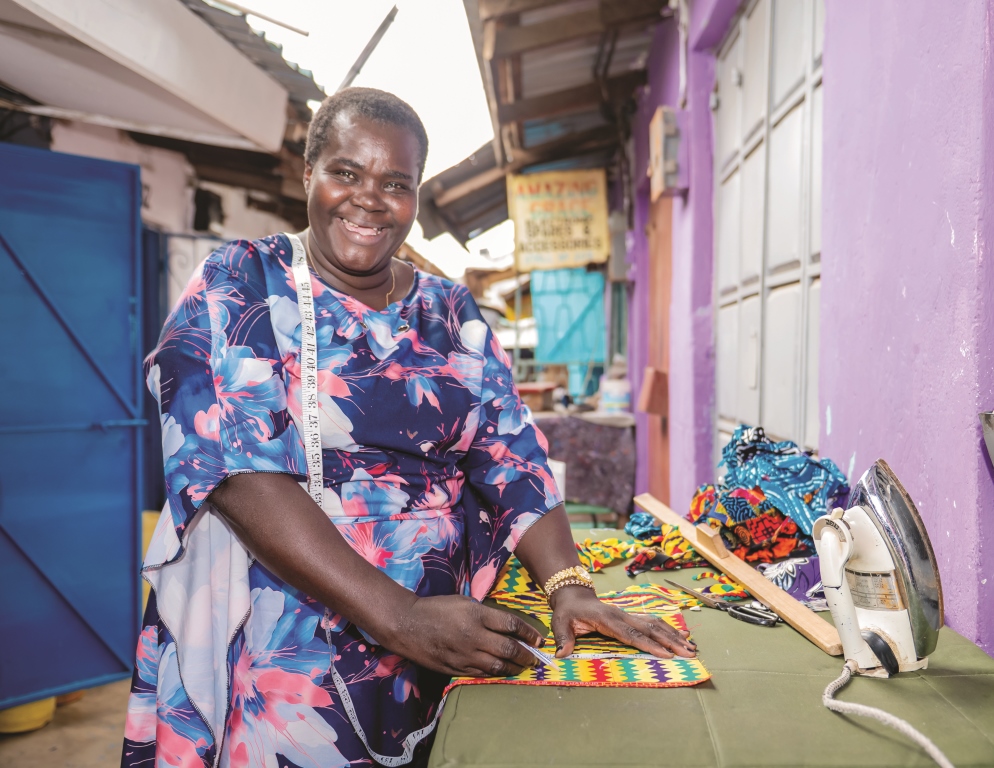
The multiplier effect of revolving capital
Beyond individual loan performance, Hand in Hand Eastern Africa’s financial design highlights the efficiency of revolving credit mechanisms. Working alongside institutional partners, philanthropic funders, and impact investors, the organization structures financial contributions into revolving pools where capital is continuously recycled to serve new cohorts of entrepreneurs.
A prime illustration of this catalytic model was a Kshs. 15.4 million emergency allocation provided by the Safaricom Foundation during the height of the COVID-19 economic disruptions. Rather than distributing the funds as a one-off relief grant, Hand in Hand Eastern Africa deployed the capital into a revolving credit mechanism. As entrepreneurs repaid their micro-loans, the funds were immediately re-issued to new small business owners. Over time, that initial KSh 15.4 million facility revolved repeatedly, eventually unlocking nearly Kshs. 200 million in cumulative micro-lending.
The example shows how targeted funding can achieve disproportionate scale when paired with a disciplined repayment framework. It also highlights the crucial role of multi-stakeholder partnerships across the inclusive finance ecosystem—where corporations, NGOs, financial institutions, and community networks align their resources to build sustainable financial pathways that no single entity could establish alone.
Measuring lasting impact and regional ambitions
For an organization dedicated to long-term poverty alleviation, measuring success requires looking far beyond short-term distribution metrics. Hand in Hand Eastern Africa utilizes Social Return on Investment (SROI) methodologies to track long-term value, estimating that every US$1 invested in its enterprise model generates between US$8 and US$9 in broader social and economic value for the local community.
Furthermore, post-graduation monitoring reveals that approximately seven out of every ten participating entrepreneurs maintain active, profitable, and growing businesses years after completing the programme. This survival rate points to the key question driving Hand in Hand Eastern Africa’s operations: what remains once the project intervention concludes? If an entrepreneur remains reliant on ongoing subsidies, the intervention offers temporary relief; if they can manage cash flow, navigate shocks, access markets, and reinvest independently, the intervention has built genuine economic capacity.
That long-term capacity building also includes building resilience against environmental pressures. For micro-entrepreneurs, an ecological crisis is inherently an economic crisis—a prolonged dry spell, high energy costs, or supply disruptions can wipe out small margins overnight. Hand in Hand Eastern Africa embeds green technologies into its core enterprise training, supporting members to adopt rainwater harvesting systems, solar energy, and climate-smart agriculture. Reducing household operating costs and safeguarding productive assets protects a small business just as effectively as expanding its sales.
This operational framework has also proven adaptable across borders. Hand in Hand Eastern Africa served as the incubator for Hand in Hand Eastern Africa Tanzania, which has since matured into an independent entity employing roughly 160 staff members across six regions. The broader network extends across East and Southern Africa, driving knowledge-sharing partnerships in countries like Uganda and collaborating with global Hand in Hand affiliates. This footprint positions the Kenyan operation as both a field provider and a regional engine for actionable enterprise knowledge.
Ultimately, the double victory at the IFIA reflects an industry-wide pivot toward quality of inclusion over mere access to funds. Financial inclusion that stops at cash disbursement produces debt; financial inclusion that combines capital with training, market networks, peer accountability, and resilience creates sustainable enterprises.
As Mr. Wambugu summarizes: “We will leave them with more power than they had, or they knew they had, because we’ll just be unlocking their potential.” That conviction defines the story behind the laurels—proving that when low-income entrepreneurs are given the tools to build their own capacity, they do not just survive; they build enterprises that endure.