


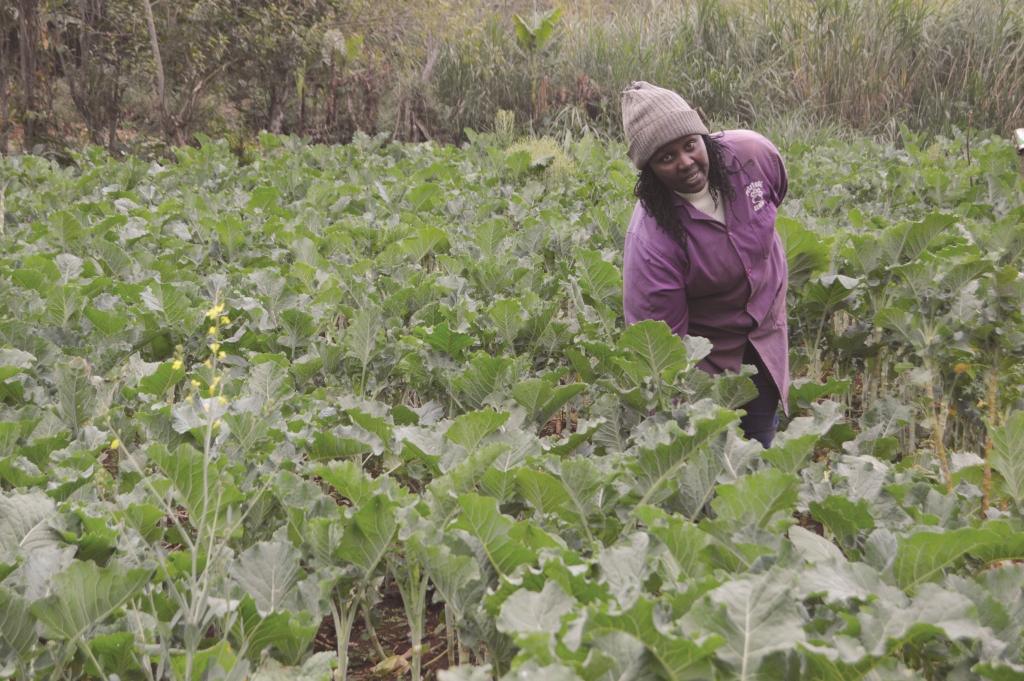
Elizabeth Wairimu Mbogo’s agribusiness journey has been shaped by a long-standing interest in farming, but it is access to working capital that has increasingly allowed that interest to develop into a more productive commercial enterprise.
Operating under the name Highland Organics, Mbogo produces vegetables including kales, spinach, indigenous vegetables and salad crops such as lettuce. Her produce reaches women vegetable traders and major supermarket outlets, including Naivas and Carrefour, while the farm itself is leased.
Her entry into agribusiness was not accidental. She recalls developing an interest in farming while still in primary school through the 4K Club, where she excelled in agriculture, before pursuing the subject in secondary school. She later undertook five months of training in hydroponics to deepen her technical knowledge.
That foundation has informed a production model increasingly focused on vegetable productivity, organic practices and reliable market supply. The commercial opportunity is significant. Some of her vegetables mature in as little as twenty eight to thirty days, creating the potential for frequent production cycles. Yet, as with many horticultural enterprises, productivity is closely tied to the availability of working capital, water infrastructure and farm inputs.
Working capital as a production tool
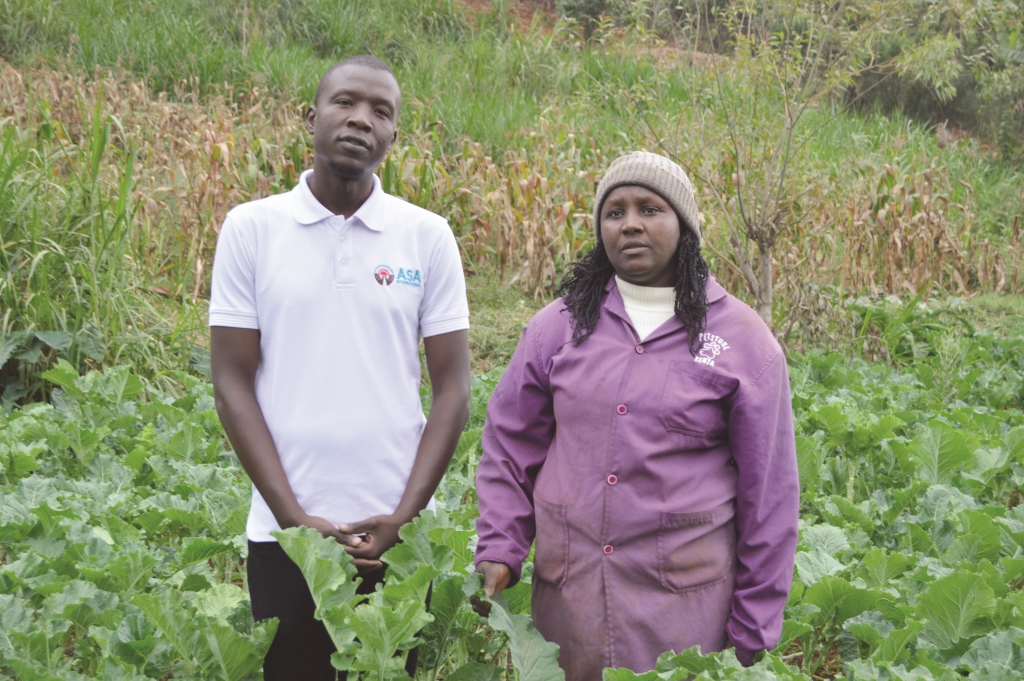
Mbogo joined ASA in 2021 because she needed financing to strengthen the business. Her borrowing journey began with a Kshs. 15,000 loan, with weekly repayments of Kshs. 675. She is now in her 11th financing cycle, with a Kshs. 95,000 facility and weekly repayments of Kshs. 4,370.
The significance of the financing, however, lies less in the size of the loan than in how it is deployed across the production cycle. Mbogo says the financing has enabled her to purchase farm essentials and equipment, maintain irrigation infrastructure, acquire compost manure, meet employees’ costs and purchase pesticides, seeds and fertilisers.
The availability of financing twice a year has also given her a more predictable source of working capital. Rather than waiting for a major cash-flow gap to emerge, she is able to inject financing into the farm at intervals that support continued production.This has been particularly important in a horticultural business where production cannot simply stop when a pipe breaks, inputs are required or labor costs fall due.
From irrigation investment to higher output
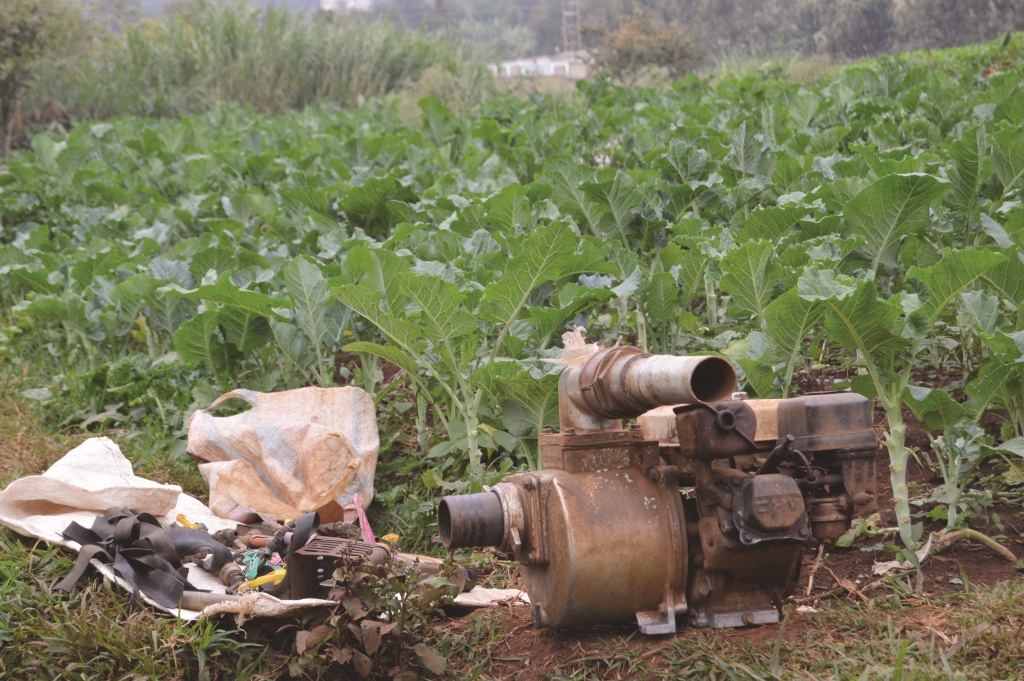
One of the clearest examples of financing translating into productive capacity is irrigation. Mbogo has invested in irrigation on the farm and uses financing to replace damaged pipes and maintain the system. She has also purchased a generator to support water pumping and spraying machines to make farm operations more efficient.
These investments have become increasingly important as the farm navigates climatic variability. Mbogo identifies climate change as one of her major production challenges, particularly during colder periods when some vegetables perform poorly. Pest infestation is another concern, requiring timely crop protection.
The combination of irrigation, improved inputs and equipment has coincided with a significant increase in production.“Before, my yields were not as much as now. For example, my kale yields used to be 1,000kg per week; now I get 2,000kg per week,” she says.
That represents a 100% increase in weekly kale production, making yield growth the clearest measurable indicator of the commercial impact of the financing.The improvement is not attributed to financing alone. Mbogo also points to the adoption of better seed varieties, including F1 hybrids, alongside manure, fertilisers, irrigation and increased effort on the farm. The financing has therefore functioned as an enabler, allowing her to bring together the inputs and productive assets required to raise output.
Building a more climate-resilient enterprise
For a vegetable producer operating in a climate-sensitive production environment, the ability to maintain water access and respond quickly to production disruptions is fundamental to commercial sustainability.
Mbogo deliberately selected the farm’s location because of its proximity to a stream, availability of land and access to the market. Yet natural water availability does not eliminate the need for infrastructure. The irrigation system, generator and replacement pipes provide the operational capacity required to move water to the crop when necessary.
Her financing also supports crop protection and input procurement, enabling her to respond to pest pressure and challenging weather conditions rather than allowing disruptions to translate directly into lost production.
The model illustrates an important distinction in agricultural finance: productive credit is most effective when it is connected to the underlying economics of the farm. In Mbogo’s case, financing is being channeled into irrigation, seed, fertiliser, crop protection, labour and equipment, inputs directly connected to production and market supply.
A value chain built around market demand
Higher yields only create commercial value if the producer can move the additional output into the market.Mbogo supplies women vegetable traders as well as leading supermarkets. She says demand remains high and the challenge is to produce enough to meet it. Her approach to markets is also pragmatic. While supermarket supply offers scale, she recognises that access can be difficult where established supplier relationships already exist. She therefore places considerable importance on buyers who can provide reliable and timely payment.
This focus on payment cycles is critical to the sustainability of a horticultural enterprise. Fast-growing vegetables generate frequent production cycles, but farmers must also continuously finance the next cycle. Delayed payments can therefore create working-capital pressure even where demand exists. For Mbogo, commercial sustainability means finding the balance between production capacity and dependable cash flow.
The next phase
The increase in output has encouraged Mbogo to think beyond simply maintaining the farm. Her next objective is to secure additional land so that she can expand production and increase yields further.She also intends to add value to the business and eventually establish a green grocery, creating a potential route towards greater control over how her produce reaches consumers.
The ambition reflects an enterprise moving gradually along the agricultural value chain, from primary production towards greater market presence and potentially closer engagement with the end consumer.Yet expansion will require capital. More land means greater production costs, while value addition and retail require investment in infrastructure, equipment and working capital.For now, Mbogo is focused on strengthening the production base that makes those ambitions possible.
The commercial case for inclusive agri-finance
Mbogo’s experience offers a practical illustration of how appropriately structured finance can influence agricultural productivity. Her financing journey has moved from Kshs. 15,000 to Kshs. 95,000 across eleven cycles, while the business has invested in irrigation, pumping equipment, spraying machinery and agricultural inputs.Most importantly, the farm has recorded a doubling of weekly kale production, from 1,000 to 2,000 kilogrammes.
The outcome provides a tangible measure of productivity rather than relying solely on perceptions of business growth. It also demonstrates how financing can support several interconnected parts of an agricultural enterprise at once. This is through maintaining irrigation, purchasing inputs, paying labour, protecting crops and investing in equipment.
For Mbogo, farming remains deeply personal, but the business is increasingly commercial in its orientation. She wants to expand landholding, improve yields, add value and develop a green-grocery outlet while continuing to serve an established network of buyers.
Her advice to other women considering agriculture is rooted in that experience: farming requires passion, but passion must ultimately be supported by disciplined production and commercial thinking.“Farming is good, the yields are marketable, you get your money instantly without straining,” she says, while emphasising that those getting into agribusiness should be passionate about it.
For an inclusive-finance institution, the significance of her story lies in what happens after credit is disbursed. The real measure is whether capital enters the productive economy, whether it strengthens an enterprise’s capacity to withstand operational pressures, and whether it contributes to measurable improvements in output.In Highland Organics, the evidence is visible in the irrigation system, productive equipment, improved seed varieties and, most compellingly, a weekly kale harvest that has grown from 1,000 to 2,000 kilogrammes.That is finance moving beyond access, and into the agricultural value chain where productivity, resilience and commercial sustainability are ultimately measured.


