


Inaugural awards to celebrate and recognize innovation in Kenya’s dynamic microfinance sector lives up to its billing as over two hundred and eighty delegates come on board in an evening of fruitful networking and knowledge sharing
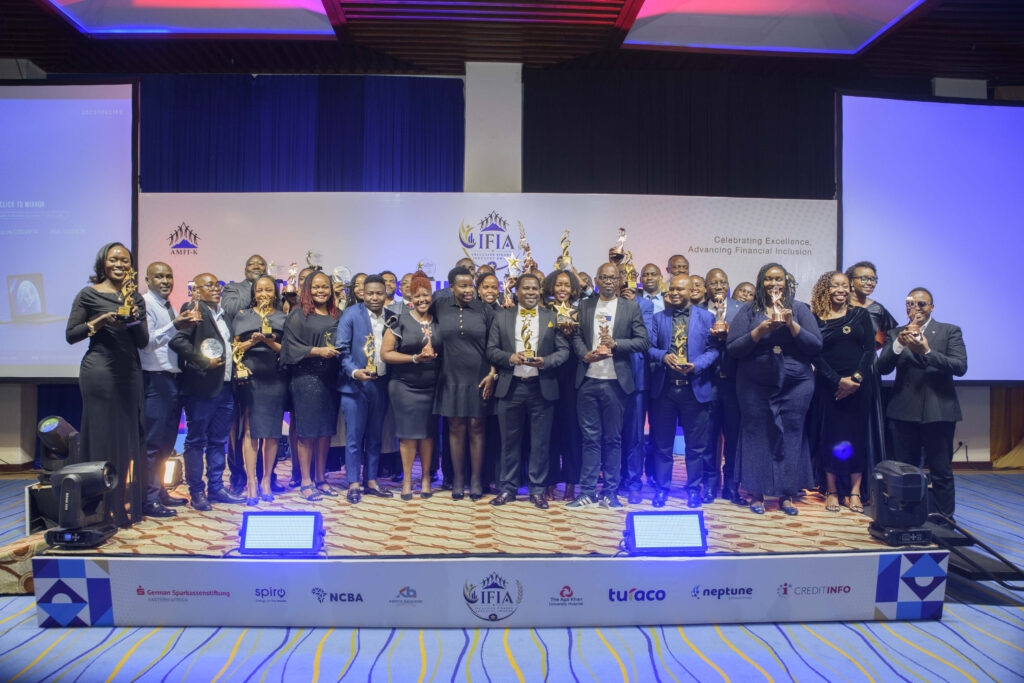
A section of the IFIA 2026 winners displaying their awards.
Celebrated author and management professional, Ken Blanchard famously said: “Feedback is the breakfast of champions.” That view is spot on.Feedback (whether critical or favourable) creates room for retrospection, improvement, innovation and growth. Against this backdrop, last year, the Association for Microfinance Institutions Kenya (AMFI-K) carried a very rigorous members’ visits campaign. The one-on-one engagements during these visits were meant to get views from members on how to enhance the association’s service delivery. “Our objective was to get views from members on the areas that we needed to perform better and whether as their umbrella body, we were giving them value,” says Caroline Karanja, CEO, AMFI-K. One of the views shared by most members during these visits was the need to organize an event that would recognize, award and celebrate institutions as well as leaders championing the growth of Kenya’s microfinance sector.
Additionally, through this forum, innovations taking place in the sector would be given visibility. “There is a lot of innovative work being undertaken by microfinance institutions and other players in the financial inclusion space, but it does not always receive the visibility that it deserves,” observes Caroline. “These innovations are in education, housing, SMEs’ finance, digital finance, women and youth empowerment as well as sustainability,” she adds.
Successful
The timely view from AMFI-K members saw the birth of the Inclusive Finance Industry Awards (IFIA). The inaugural event was held in August at the Movenpick Hotel, Nairobi, under the theme: ‘Celebrating excellence, advancing financial inclusion.’ With an attendance ofover two hundred and eighty delegates drawn from the microfinance sector, banking, government, non-governmental organizations, development partners, as well as eight sponsors, the event was a huge success.
More importantly, it attracted sixty one institutional submissions across thirteen categories. These submissions were further consolidated into forty six unique institutions – category entries, alongside two individual leadership awards.
One of the major roles of AMFI-K is to strengthen and provide a voice for the microfinance sector, promote innovation and support responsible financial services. Currently, the association has ninety eight members drawn from microfinance banks, non- deposit taking microfinance institutions (licensed by the Central Bank of Kenya as digital credit providers), wholesale lenders (also known as social impact investors), developmental partners and consultants. AMFI-K is driven by four key objectives: policy and advocacy, capacity building, networking and linkages as well as resource and knowledge management.
Preparations
Being the inaugural event, the preparations for IFIA 2026 were extensive. To start with, a strong team was assembled comprising AMFI-K board, secretariat and a planning committee. Their major tasks were: mobilising partners and sponsors, inviting nominees, getting a jury and identifying an ideal venue for the event.
Dr. Patrick Gathondu, CEO, Bimas Kenya Limited and a member of the planning committee says that after getting a buy in from the board, the team identified the awards’ categories. This was not an easy task considering that the microfinance sector is wide and it covers many key areas of our economy. After accomplishing that, nominees in various categories were invited. The categories included: fastest growing microfinance bank, fastest growing non-deposit taking credit provider, microfinance bank of the year, non-deposit taking credit provider of the year, best agricultural finance initiative, best housing microfinance initiative, best SME finance initiative, best digital financial inclusion initiative, best women economic empowerment initiative, best youth and inclusive finance initiative, most innovative financial inclusion product, and finally, best sustainability, ESG and WASH initiative. The two individual awards were: CEO of the year and Industry life achievement. Through the committee, the board assisted in planning this event, while the execution was done bythe AMFI-K secretariat.

FOCUSED: Caroline Karanja, CEO, AMFI-K.
The jury
“One of the most important steps of IFIA-2026 was developing a credible and transparent judging process,” says Caroline. In that regard, a jury was set up. Its members included: Lukania Geraldine Makinda, the project lead at FSD Kenya, where she leads initiatives that strengthen the generation, accessibility, and use of data for inclusive finance; Jean Njeri, a development finance professional with over six years of experience delivering research, advisory, and ecosystem development initiatives across Africa; Kimathi Kamencu, an advocate of the High Court of Kenya and the partner in charge of corporate (commercial) and property law at Musyimi and Company, and finally, Albert Mang’era Bundi, a senior manager in MSC’s Anglophone Africa Community and Livelihood domain, based in Nairobi, a banker and inclusive finance specialist. “The jury assessed the initiative or programme, the challenge addressed, measurable results and impact, innovation, contribution to financial inclusion and livelihoods, lessons and best practices,” Caroline notes. Significantly, the well-structured and evidence- led jury process gave credibility to the results.
By and large the entire team of IFIA 2026 spent considerable time mobilising institutions and partners, building the sponsorship proposition, coordinating nominees and ensuring that the event provided the right experience for the sector. Caroline attributes the event’s success to the fact that the organising team had a very clear purpose. “This was not simply an awards dinner; it was designed as a platform to reward, recognise and celebrate success in the microfinance sector,” she avers adding that the strong participation from players in the microfinance sector demonstrated that many institutions were willing and able to come forward and showcase their innovations.
IFIA 2026 also had a strong participation among stakeholders across government, financial institutions, development partners, investors, technology providers and the media, leading to its success. “Our sponsors and partners equally played a pivotal role in the event’s success, and there was a strong team effort from AMFI-K leadership, the secretariat, planning committee, the jury and all the service providers,” says Caroline.
Lessons
One of the major lessons learnt from IFIA-2026 is that it is important for the participating institutions to support their submissions with credible evidence. “The institutions that performed well in this event demonstrated clearly how they had developed their innovations, and more importantly, the impact of the same,” Caroline notes.
This demonstrated that outcome measurement is a broad opportunity for the microfinance sector. According to Caroline, whereas institutions can disclose the number of loans that they have disbursed, or the number of customers they have onboarded, the impact of the same is the most important parameter of success. “We need to ask ourselves whether the customer’s life was transformed after accessing a loan product,” says Caroline adding that this can be evidenced by improvement in the level of income, productivity and resilience.
The other important lesson was the need to create value for IFIA 2026 beyond the actual event. “The stories of the finalists and winners, as well as lessons emerging from the judging process are captivating and can be shared throughout the year,” avers Caroline. The team also learnt the importance of starting the process of engaging the sponsors and stakeholders early enough and putting in place a very clear evaluation criteria from the word go.
While congratulating the winners, Caroline cautions them not to rest on their laurels.
She is categorical that the awards come with aheavy responsibility. “The IFIA 2026 recognition should encourage all the winners to keep innovating, serving customers responsibly and demonstrating measurable impact,” she says. “We are also encouraging the winners to share their experiences so that other institutions can learn from them,” she adds. In the same vein, partners and sponsors played a major role in making IFIA 2026 successful. “We really thank our sponsors and partners for believing in thevision of IFIA and for investing in the inclusive finance ecosystem,” she happily notes.
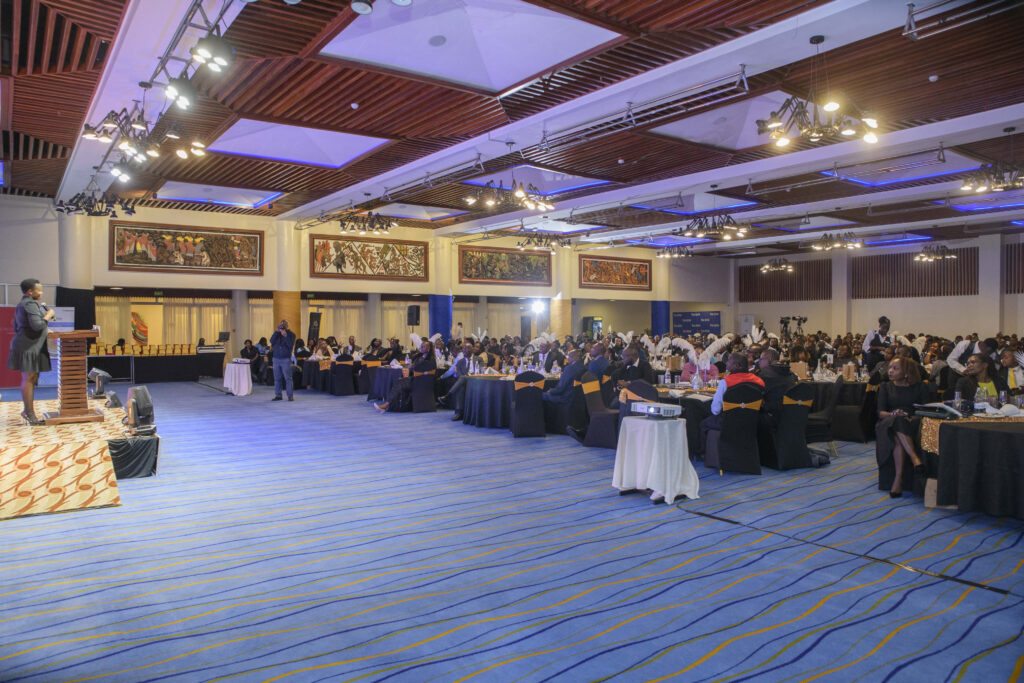
IFIA 2026 chief guest, Susan Mang’eni, Principal Secretary, State Department for Micro, Small and Medium Enterprises Development addressing delegates.
Road ahead for IFIA
Through IFIA, AMFI-K is confident of building an enduring platform that creates value for the microfinance sector, its partners and all the beneficiaries of financial inclusion in Kenya. Additionally, there are plans to strengthen the evidence framework, introduce clearer outcome indicators, and develop category- specific measures so that the impact across sectors like agriculture, housing, education, SME finance, digital finance, WASH (water, sanitation and hygiene) and ESG (environmental, social and governance) can be properly evaluated. In the same regard, AMFI-K is planning to create a year-round IFIA content programme, through which stories of the winners and finalists will be told.
As a means of enhancing the event’s sustainability, AMFI-K will endeavour to build a long-term partnership with sponsors and development partners. The ultimate goal is to make IFIA an annual event where knowledge on innovative financial solutions can be exchanged and innovations can gain visibility.
Last quarter activities
As the umbrella body of the microfinance sector, AMFI-K is planning a sports event for its members in October. This will give them an opportunity to bond and strengthen their collaboration. Additionally in December, a networking event for all the members (dubbed the Chairman’s mbuzi) and which was launched last year has been lined up.
In line with one of its objectives (policy and advocacy), AMFI-K is currently lobbying for the enactment of the Microfinance Bill 2026. The Bill is already with the finance committee of Kenya’s Parliament and AMFI-K has sent its submissions.
Market trends
Kenya’s microfinance sector is among the most vibrant in Sub-Saharan Africa. With many institutions deeply rooted in the rural and far flung areas of the country that are underserved by the mainstream lenders, the sector has undergone a lot of transformation over the years since 1980. In the early years, most of the solid microfinance banks and credit only microfinance institutions in the market today were small projects supported by donors to alleviate poverty among households in the bottom of the economic pyramid. With regulations now in place, these lenders, operating in the rural and urban areas, now serve key economic sectors including: agriculture, small scale manufacturing, education, health, water and sanitation.
Majorly, the credit only microfinance institutions are now being regulated and licensed by the Central Bank of Kenya (CBK) as digital credit providers (DCPs). Before this development, only microfinance banks were under the ambit of CBK. Coupled with a big push for digitalisation in the vibrant sector, by and large, regulations have contributed to the development of innovative products and services.Regulatory developments have also contributed to strengthening consumer protection and creating a more structured operating environment for the sector.
Fundamentally, the group lending methodology (an innovation of the Grameen Bank of Bangladesh) still remains a key model in the sector with many players lending to women without requiring them to offer physical collaterals like title deeds. It is a common trend in Kenya for women to form groups (popularly known as chamas in Kiswahili) to address both their social and economic needs. “Women borrowers have demonstrated strong repayment performance across a number of products offered by AMFI-K members, “observes Caroline. Against this background, AMFI-K in partnership with CBK is rolling out a programme named We Finance Code. This programme is addressing the financial challenges facing women in Kenya. Currently, AMFI-K is onboarding its members to the programme which is also being supported by Financial Sector Deepening (FSD) Kenya.
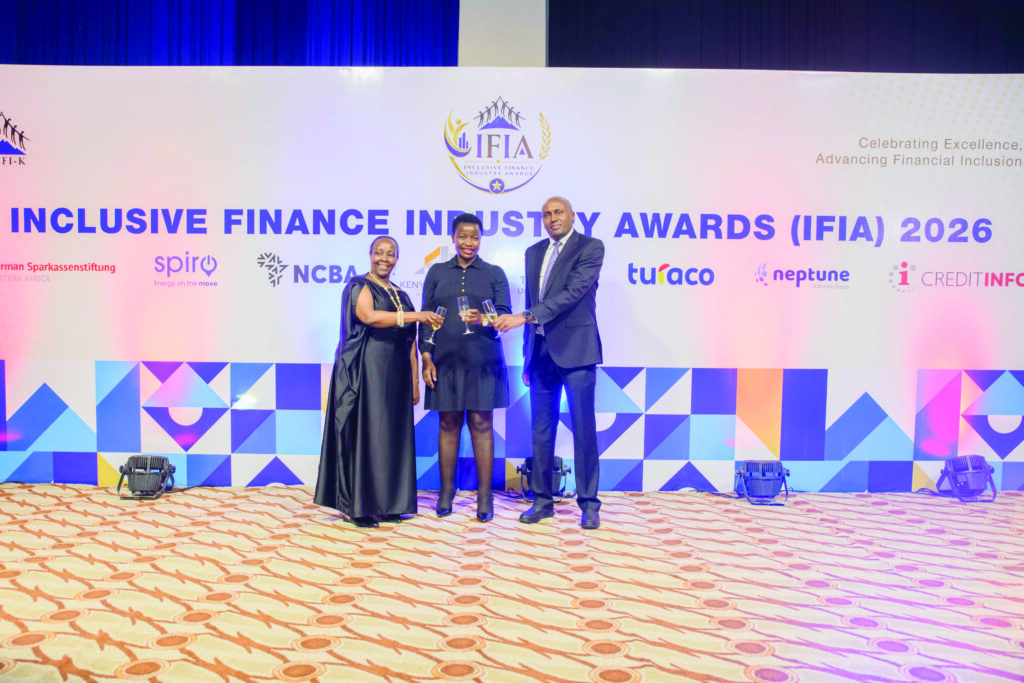
(From left- right) Caroline Karanja Chief Executive Officer AMFI-K, Susan Mang’eni, Principal Secretary, State Department for Micro, Small and Medium Enterprises Development and Wangaruro Mbira, Chairman, AMFI-K celebrating the successful IFIA Awards – 2026.
As AMFI-K seeks to achieve its ambitious mandate, there is no doubt that IFIA-2026 has given it the impetus to serve Kenya’s microfinance with more energy and dedication.


