


Tier one Sacco members resolve to change their governance system during a well-attended Special General Meeting ( SGM)
By George Gichuki
Meticulous, intentional and well calculated steps could be tasking, but they help organizations to attain their long term goals smoothly and to avoid firefighting. That is the path Mentor Sacco strategically chose to take when the Ministry of Co-operatives and MSMEs in 2025 issued a directive to all co-operative societies and Saccos in Kenya with more than five thousand members to shift from direct general meetings to the delegate system. That was a thorny issue considering that members of these organizations ( Mentor Sacco included) had over the years become accustomed to direct general meetings.
In particular, Annual General Meetings ( AGMs) had become very popular with these members since they offered them an opportunity to bond, debate and pass resolutions, interact with the leadership and management teams , besides receiving branded merchandise. As icing on cake, at the end of AGMs, members would receive their dividends on shares and interest on ordinary deposits. Convincing members to break from that celebrated tradition was therefore bound to be an uphill task.
To address this challenge, Mentor Sacco first broke the news about this development to its members during the AGM held in January, this year. This was followed by an intensive campaign conducted during the members’ education and information forums , held from May to June in all the regions where the Sacco has a presence. During these forums, members were sensitized on the benefits of embracing the delegate system of governance by leading co-operative professionals.
Special General Meeting
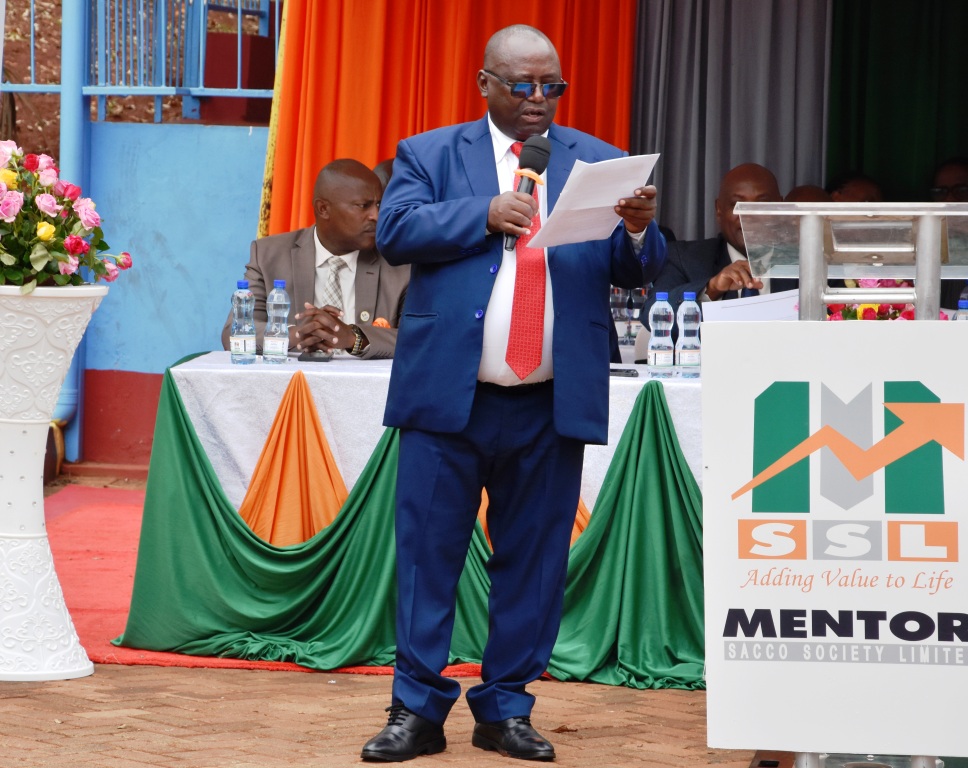
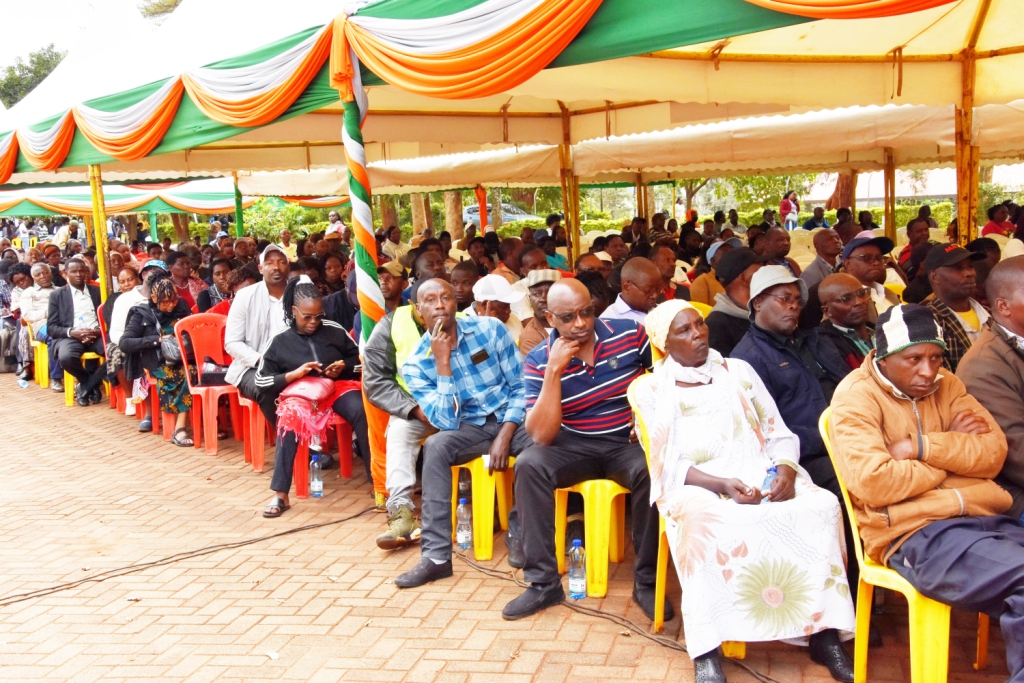
Against this backdrop, on seventeenth of October, Mentor Sacco successfully held a Special General Meeting ( SGM) at St. Mary’s Catholic Cathedral grounds in Murang’a town, where members resolved to amend one of its by-laws, giving room to the lender to adopt the delegate system of governance. This proved that its preparations were strategic.
Addressing members during the SGM , the Chairman, Mr. Eliud Mbugua, emphasized that by-laws are the internal rules and regulations governing how organizations ( such as Mentor Sacco) operate. In view of the second principle of the co-operative movement ( democratic member control), by – laws of Saccos can only be legally amended by members during a general meeting. “ By-laws define the rights and responsibilities of members, the governance structure, the election and responsibilities of leaders, and how important decisions are made,” said Mr. Mbugua.
Additionally, during this SGM, members resolved to increase their monthly risk fund contribution from Kshs. 200 to Kshs. 350. Currently, using the risk fund, Mentor Sacco supports the family of a deceased member with Kshs. 50,000 . This money is used to meet the last expenses. Should the spouse of the deceased also happen to be a member, this amount goes up to Kshs. 80,000. Most importantly, his or her ordinary deposits are doubled and given as a benefit to the nominees, while any outstanding loan is cleared. All these benefits are also given to members who may get incapacitated in the course of their work, hence rendering them economically unproductive. It is a big relief to the member and his or her family.
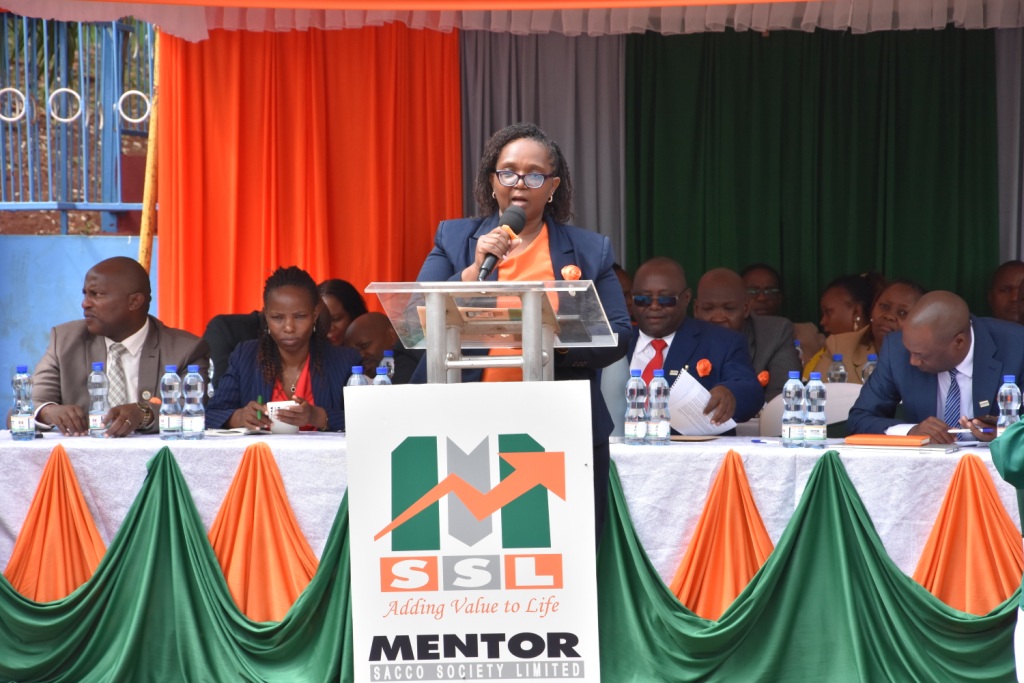
The Chief Executive Officer, Mrs. Joyce Ndegwa, while passionately appealing to the members to increase their monthly risk fund contribution, advised them that it serves as a very effective life insurance cover. This is despite the fact that the monthly contribution to the fund is very little in comparison to the premiums paid to most life insurance underwriters offering similar products in the Kenyan market. “ It is important to have a strong risk fund that is able to cater for all our members’ benefits as and when they arise without deducting the same from our surplus kitty,” Mrs. Ndegwa told the members adding that the increment will also go a long way in boosting the institutional capital of Mentor Sacco.
Delegate system
In his address, Mr. Mbugua advised members to deliberate on the adoption of the delegate system of governance with an open mind, a deep sense of ownership and a strong commitment to the long term interest of their Sacco. “ Kindly listen carefully to the presentations, seek clarification where necessary and consider the proposals based on their merit,” he told the members, while urging them to participate respectively and constructively in the SGM.
Going down memory lane, Mr. Mbugua reminded the members that in 2013, Mentor Sacco also held an SGM where a resolution was made to rebrand from Murang’a Teachers Sacco to Mentor Sacco. This paved the way for the lender to open its common bond and start offering front office service Activity ( FOSA). By and large, this strategic development has seen Mentor Sacco grow in leaps in bounds. Currently, it is serving over fifty thousand members mainly in Kiambu, Nairobi, Machakos and Kajiado, beyond its traditional market in Murang’a. Additionally, by leveraging digitalisation, the Sacco serves members throughout the country as well as in the diaspora market.
With a current asset base of over Kshs. 19 billion, the fast growing lender is ranked tier one by the Sacco Societies Regulatory Authority ( SASRA). “ As our Sacco continues to grow in membership, assets, and geographical reach, it has become necessary to review our governance structures to ensure they remain effective, inclusive, and responsive to the needs of our members,” Mr. Mbugua assured the members.
In the same vein, going by its history , in 2015, Mentor Sacco held another successful SGM where members effected an increase in their minimum share capital from Kshs. 5,000 to Kshs. 30,000. The objective was to boost the lender’s institutional capital in compliance with the guidelines from SASRA.
The Chairman further told members that the amendments to embrace the delegate system are intended to provide a clear framework for the election of delegates, fair representation of members, the responsibilities of delegates, and the conduct of meetings under the new governance structure. He assured them that even after effecting these amendments, the Sacco will still remain under their ownership, as guided by the co-operative principle of democratic member control. “ We want to change the governance structure in order to grow responsibly, while preserving democratic member control and effective representation,” he emphasized. “ Let us remember that our strength lies in our unity, our sustainability in sound governance and our future in the decisions we make together,” he added. Most importantly, he assured the members that the board remains committed to safeguarding their interests, upholding cooperative values and ensuring that the transition to the delegate system is undertaken transparently, fairly and in accordance with applicable laws and regulatory requirements.
Supreme authority
Upon the conclusion of this exercise, the supreme authority of Mentor Sacco will vest in the delegates meeting subject to the provisions of the Corporative Societies and the Sacco Societies Act as well as any other written rules or directions of the said authority. The delegates will be elected by members from the electoral zones, units or clusters as provided in the electoral policy. They will represent the members’ views during the Annual Delegates Meetings ( ADMs) or Special General Meetings ( SGMs).
The Sacco shall have a maximum of one hundred and eighty delegates or as may be decided by the board and approved by the delegates meeting from time to time. The term of the delegates shall be three years. It is important to note that the board of directors shall remain the governing body of the Sacco. It shall be elected directly by and from the delegates in the designated electoral zones and shall comprise nine members and three supervisory committee members. The electoral policy shall prescribe the modalities.
As Mentor Sacco finalizes on the plans to shift to the delegate system, members will now be mainly interacting with the leadership and management teams during the education and information forums. The next course of action for the Sacco should therefore be thorough preparations for the said forums since in essence, they will replace the glamour associated with AGMs.


