



When the Covid-19 pandemic disrupted Kaptagat School, Josephine Rudisi was forced to rebuild a business that had taken years to establish. The school, founded by her mother in 2005 as a daycare serving families around Kangemi market, had grown into an established learning institution by the time Rudisi took over in 2010. Then the pandemic brought its momentum to a halt.
Before Covid-19, the school had about 400 pupils. When operations resumed, only 50 children returned, leaving Rudisi to confront the difficult task of rebuilding the school while keeping its teachers, meeting operational costs and serving families whose own finances had been affected.
It was against this backdrop that access to appropriately structured credit became important to her recovery. Rudisi had first encountered ASA Kenya through a women’s Chama (self-help group). An ASA representative, visited the group and introduced the members to the institution and its lending model. For women running small businesses, the proposition was particularly relevant because conventional bank financing could come with conditions they found difficult to meet.
“I preferred ASA because of the competitive interest and friendly terms and conditions of its loan products,” Rudisi recalls. At the time, she says, her school was not yet formally registered, making access to financing even more difficult. ASA offered an alternative through its group-based lending model, where members could access financing with guarantors rather than the conventional requirements associated with mainstream lenders.
Her relationship with ASA initially began through the Chama, but the pandemic eventually forced the group to disband after members could no longer sustain weekly repayments. Rudisi later returned as an individual borrower. What mattered to her was not simply access to money, but the structure of repayment. “I started with a loan of Kshs.10,000, before graduating to bigger amounts. Currently, I’m servicing a Kshs. 450,000 loan facility,” she happily says.
That progression illustrates how financing became aligned with the growth of the enterprise rather than being a one-off intervention. The relatively manageable repayment structure allowed Rudisi to borrow according to the capacity of her business and increase the amount as the school grew. She says the weekly repayment arrangement made the loans easier to manage, particularly compared with the conditions she had encountered elsewhere.
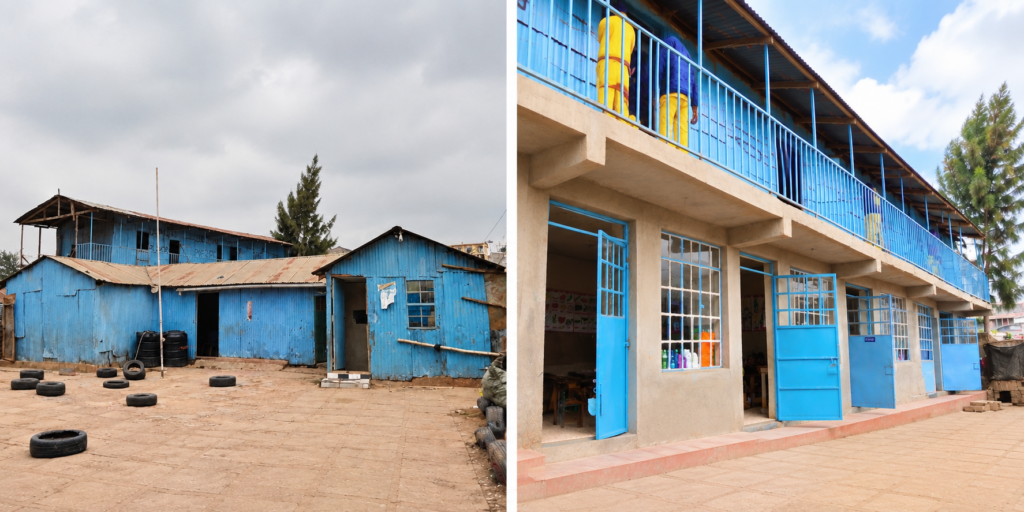
The result today is a considerably larger institution. Kaptagat School has about 200 pupils and 15 teachers, supported by a cook and two other members of non-teaching staff. Rudisi has also invested in maintaining the school environment, retaining teachers and monitoring both academic performance and relationships with parents.
The school’s performance has become another measure of the enterprise’s recovery. Rudisi says the institution has produced pupils who have progressed to universities including Maseno University, Kenyatta University and the University of Nairobi. That is no mean achievement. She also says that the school performs very well in sports; including being ranked highly in football and netball competitions in Nairobi county.
For Rudisi, however, growth is not simply about the number of pupils or the size of the loan. It is about building an institution capable of serving families over the long term. The school has a ten year lease, and she hopes eventually to acquire the property rather than renew the lease. Permanent classrooms are already being developed, while computer facilities are being introduced in response to the demands of the competency-based curriculum.
The next financing requirement is therefore tied directly to the school’s physical expansion. Rudisi estimates that constructing three additional classrooms would require about Kshs. 1.5 million, with Kshs. 500,000 already available. Approximately Kshs. 1 million is needed to complete the project.
Her message to ASA is straightforward: the business has outgrown the perception of a very small enterprise and now needs financing that reflects its increasing capacity. “They should increase our loan facilty, they should not view us as a micro enterprise; our revenue has grown significantly,” she says. “So if we construct modern classes, we are going to motivate more parents to bring their kids.”
Fruitful journey
That comment captures the wider significance of Rudisi’s financing journey. What began with a Kshs. 10,000 loan has developed into a business capable of employing 15 teachers, serving 200 pupils and planning further investment in permanent infrastructure. Her experience also demonstrates the importance of matching credit to the actual cash-flow realities of an enterprise.
Rudisi says she is now able to repay ahead of schedule when business permits. “They give me five months, I complete within two months. So I feel good when I pay early; if I need more money I can go back and get more, then continue with my business.”
For her, responsible borrowing is inseparable from responsible business management. She advises other women not to fear credit, but to take it when the business is ready and when repayment will not create unnecessary strain.
“Don’t fear a loan, but take a loan at the right time,” she says.

Building resilience
That philosophy is evident in the way Rudisi has built resilience beyond the school itself. During Covid-19, when education was disrupted, she diversified into transport, moving goods between Nairobi and towns including Nakuru, Eldoret, Kitale and Kapenguria. The additional business has helped provide another source of income and strengthened her ability to manage financial commitments.
Today, Rudisi is already thinking beyond survival. She wants to add classrooms, strengthen the school’s permanent infrastructure and eventually establish a kindergarten at another property she owns. The school is also already full for the next admission cycle, with plans to admit about 70 new pupils.
Her story gives a tangible dimension to the case for inclusive SME finance: the value of credit is not captured only by the amount disbursed, but by what the borrower is subsequently able to build. In Rudisi’s case, financing has accompanied a transition from a business recovering from a severe shock to an expanding school employing staff, educating hundreds of children and preparing to invest further in its physical capacity.
For an institution recognised for its inclusive finance work, this is precisely where the impact of finance becomes visible, not merely in the loan account, but in the enterprise, the employees, the families it serves and the plans its owner can now afford to make.


