


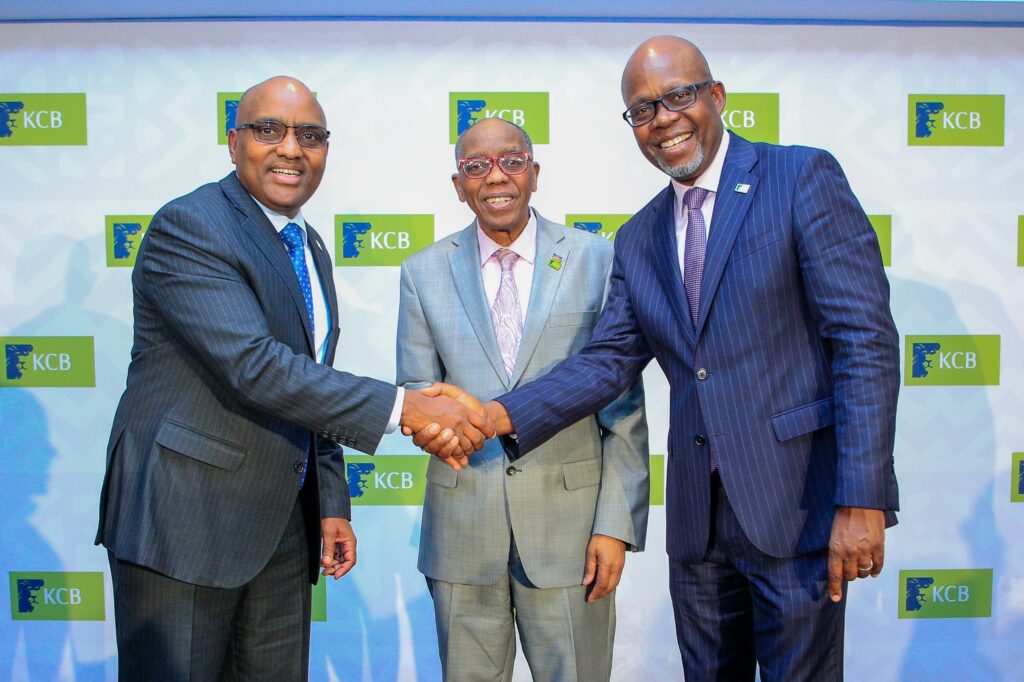
KCB Group has reported a strong financial performance for the first half of 2026, with profit before tax rising by 20.8 per cent to KShs. 49.3 billion, supported by income growth, disciplined cost management and continued expansion across its regional operations.
KCB Group PLC has reported KShs. 49.3 billion in profit before tax for the first half of 2026, marking a 20.8 per cent increase and reflecting what the Group described as strong income growth and discipline in cost management.
The Group’s balance sheet also expanded significantly during the period, with total assets growing 16.8 per cent to close at KShs. 2.3 trillion. The expansion was supported by a 15.1 per cent increase in customer deposits to KShs. 1.7 trillion and a 14.2 per cent growth in gross loans to KShs. 1.3 trillion, driven by the strength of KCB’s corporate and retail franchise.
The strong performance has also translated into increased shareholder returns. The KCB Group Board has declared an interim dividend of KShs. 3.00 per share, up 50 per cent from the KShs. 2.00 per share paid in the previous year. The dividend represents a total distribution of KShs. 9.64 billion and reflects the Group’s commitment to increasing its dividend payment ratio.
“Our strong half-year performance reflects the resilience of KCB Group’s diversified business model, the strength of our regional footprint, and the confidence our customers continue to place in us,” said KCB Group Chief Executive Officer Paul Russo.
He added that despite a tough operating environment, the Group remained committed to supporting businesses and households, accelerating digital transformation and creating long-term sustainable value for shareholders and the communities it serves.
Income Growth Across the Business
KCB Group’s total income increased by 9.5 per cent to KShs. 108.1 billion during the period, reflecting the Group’s ability to sustain growth in a dynamic operating environment by leveraging its diversified business model.
Non-funded income was a major contributor to this performance, increasing by 15.4 per cent to KShs. 34.1 billion. Funded income stood at KShs. 74.0 billion, representing a 7.0 per cent increase.
The Group’s regional banking subsidiaries also continued to demonstrate resilience and strength. Operations outside KCB Bank Kenya contributed 27.7 per cent of the Group’s profit before tax and accounted for 31.1 per cent of the total balance sheet.
The non-banking businesses also recorded notable performances. KCB Investment Bank posted a 226.6 per cent increase in profit before tax to KShs. 503.2 million, driven by increased advisory mandates and capital markets transactions.
KCB Corporate Trustee Services recorded a 79.8 per cent increase in profit before tax to KShs. 142.5 million, supported by growth in trustee and fiduciary services. KCB Bancassurance Intermediary Limited delivered KShs. 335.4 million in profit before tax.
Lending Growth and Improving Asset Quality
Gross loans increased by 14.2 per cent to KShs. 1.3 trillion during the first half, driven by strong new-to-bank customer acquisition as well as increased lending to existing customers across the retail, SME and corporate segments.
At the same time, the Group recorded an improvement in asset quality. Its stock of gross non-performing loans declined by KShs. 17.3 billion, from KShs. 221.1 billion to KShs. 203.8 billion. This resulted in the Group’s non-performing loan ratio declining to 15.1 per cent from 18.7 per cent. KCB attributed the improvement to proactive rehabilitation of distressed facilities, strengthened recoveries and greater discipline in credit risk management practices.
The Group also maintained what it described as a healthy funding profile. Its loan-to-deposit ratio improved to 78.8 per cent from 79.5 per cent, while return on assets remained stable at 3.3 per cent, demonstrating continued balance sheet resilience and efficient asset utilisation. Return on equity stood at a strong 21.1 per cent. Total equity attributable to KCB Group shareholders increased by 16.3 per cent to KShs. 357.0 billion, compared with KShs. 306.8 billion a year earlier. The Group attributed the increase to robust earnings growth, capital retention and the continued strength of its balance sheet.
Strong Capital Position
KCB Group maintained a strong capital position during the period, with all its banking subsidiaries remaining well-capitalised and fully compliant with their respective regulatory capital requirements.
The Group’s core capital to risk-weighted assets ratio stood at 18.6 per cent, comfortably above the statutory minimum of 10.5 per cent. Its total capital to risk-weighted assets ratio stood at 21.6 per cent, significantly above the regulatory threshold of 14.5 per cent.
According to the Group, the strong capital buffers position it to support future business growth, sustain its commitment to progressive dividend distribution, absorb potential shocks and continue financing customers across its markets. KCB Group Chairman Dr. Joseph Kinyua said the performance reflected the effectiveness of the Group’s governance framework and disciplined execution of its long-term strategy.
He said the Group remained focused on strategic oversight that enables sustainable growth, prudent risk management and continued investment in innovation, while supporting economic development and delivering long-term value to shareholders and stakeholders across the region.
Expanding Access to Finance and Homeownership
The first half of the year also saw KCB advance several initiatives across financial inclusion, homeownership, digital banking and sustainable finance. In April, KCB launched its flagship Pata Kwako campaign, a market-wide initiative designed to eliminate barriers to homeownership.
As part of the campaign, the bank rolled out a Kenya Mortgage Guarantee Trust-backed MSME mortgage solution offering 15-year terms at 9.9 per cent per annum. The solution targets gig economy players and SMEs with irregular income streams.
KCB subsequently announced a strategic partnership with the Kenya Defence Forces to deliver dedicated scheme mortgages to members of the disciplined forces, with rates starting from 4 per cent per annum.
In Tanzania, KCB Bank Tanzania floated the Mapato Sukuk, an Islamic bond whose first tranche was significantly oversubscribed. The issue raised TZS 30.24 billion against an initial target of TZS 10 billion, representing a 302 per cent oversubscription rate. The Group said the outcome highlighted significant market appetite for Shari’ah-compliant and ethical financial instruments.
Driving Digital and Sustainable Finance
In May, KCB announced the introduction of a flat KShs. 20 fee for all PesaLink transfers, while transactions of up to KShs. 1,000 were made free of charge. The initiative forms part of the Group’s broader strategy to promote financial inclusion and encourage adoption of low-cost digital payment channels.
Sustainable finance remained another area of focus. In June, KCB released its 2025 Sustainability Report, which highlighted the disbursement of KShs. 48.8 billion in green financing to support projects aimed at advancing environmental stewardship.
Through KCB Foundation, the Group also partnered with Hivos to launch the Tujenge Pamoja Programme, a strategic initiative aimed at accelerating Kenya’s transition to a circular and inclusive green economy.
During the period, KCB further expanded its clean energy footprint by partnering with Nandi and Machakos counties to solarise public health facilities across the country and support Kenya’s broader renewable energy and climate action goals.
New Digital Solutions Across the Region
KCB also introduced new digital solutions aimed at making banking services more accessible. The Group rolled out Bid Express, a digital platform that allows customers to request and generate unsecured bid bonds digitally from anywhere in the world without visiting a branch.
In Rwanda, BPR Bank and MTN MoMo Rwanda launched MoFaya, a digital loan and savings solution enabling eligible customers to access instant loans of up to Rwf2 million and save directly from their Mobile Money wallets. The initiatives add to the Group’s focus on digital transformation and expanding access to financial services across its markets.
Recognition Across Local and International Platforms
The Group’s performance and market presence also attracted recognition during the period. KCB Group was named Kenya’s Best Bank by Euromoney and Best Banking Group at the World Finance Banking Awards. The Group also featured among the Financial Times’ Africa’s Fastest Growing Companies 2026. These recognitions came alongside continued expansion of KCB’s regional banking and non-banking operations.
A Regional Banking Footprint
KCB Group PLC describes itself as East Africa’s largest commercial bank. Established in 1896, the Group is headquartered in Kenya, which serves as its lead market through its banking subsidiary KCB Bank Kenya.
Over the years, the Group has expanded into Tanzania, South Sudan, Uganda, Rwanda, Burundi and the Democratic Republic of Congo. KCB Bank Kenya and Trust Merchant Bank also have representative offices in Ethiopia and Brussels respectively.
Beyond its banking subsidiaries, KCB Group owns KCB Bancassurance Intermediary Limited, KCB Investment Bank, KCB Corporate Trustee Services, Riverbank Solutions, KCB Foundation and Kencom House Limited as non-banking businesses.
The Group says it has the largest branch network in the region, with 460 branches and 1,247 ATMs, alongside more than 1.4 million merchants and agents offering banking services on a 24-hour, seven-day basis across East Africa. This physical network is complemented by mobile and internet banking services and 24-hour contact centre services. KCB also maintains correspondent relationships with more than 200 banks globally, supporting customers with international trade requirements wherever they operate.

