



The architecture of modern economic expansion relies fundamentally on the depth, resilience, and operational efficiency of a nation’s financial intermediation machinery. In Kenya, the financial sector has long transcended traditional transactional banking to establish itself as the central nervous system of domestic economic activity. As the nation navigates a complex macroeconomic matrix characterized by shifting fiscal policies, inflationary adjustments, and evolving global market dynamics, the intersection between macroeconomic performance and financial institutional growth commands rigorous executive scrutiny. Evaluating this relationship requires looking past headline aggregates to examine how national savings are mobilized, how credit is rationed or expanded, and the extent to which financial deepening translates into tangible structural transformation, employment creation, and broad-based enterprise development.
At the macro-economic level, Kenya’s economic resilience has consistently been anchored on the robust contribution of the financial sector. National accounts and statistical tracking underline a dynamic synergy wherein macroeconomic expansion relies directly on the liquidity injected and managed by commercial banks, microfinance banks and institutions, savings and credit cooperative societies, and capital market participants. Yet, this dynamic is moderated by systemic realities. Domestic savings mobilization, though supported by a high rate of financial inclusion, faces persistent headwinds from cost-of-living pressures and household disposable income constraints. Consequently, the challenge for financial intermediaries is not merely capturing deposits, but optimizing the velocity and allocation of those funds to stimulate productive investments across key economic drivers, including agriculture, manufacturing, housing, and infrastructure.
The macro-financial environment is further shaped by fiscal dynamics and public sector borrowing requirements. When public borrowing exerts sustained pressure on domestic capital markets, it inevitably alters liquidity distribution across the financial system. For commercial banks and institutional investors, sovereign debt instruments present compelling risk-adjusted yields, influencing asset allocation strategies. Understanding how this public borrowing footprint interacts with private-sector credit growth is essential for diagnosing the health of the economy. When credit expansion to micro, small, and medium-sized enterprises (MSMEs) and core economic sectors face friction, the broader multiplier effect on job creation and Gross Domestic Product (GDP) acceleration is inevitably constrained. Thus, the overarching economic narrative is one of immense potential tempered by the structural imperative to align financial sector expansion with national developmental priorities.
Savings, liquidity, and structural pressures
The broader economic theatre within which financial institutions operate is defined by a delicate balance between monetary policy stances, price stability, and credit availability. The Central Bank of Kenya’s policy framework, designed to anchor inflation within target bands and manage exchange-rate volatility, directly influences the cost of funds across the financial intermediaries. As commercial banks manage their liabilities against these macroeconomic indicators, the cost of credit inevitably reflects prevailing benchmark rates and perceived operational risks.
Domestic resource mobilization remains a cornerstone of sustainable economic independence. While Kenya boasts of a sophisticated mobile money ecosystem and widespread account ownership, translating retail deposits into long-term development capital remains an ongoing institutional pursuit. Savings accumulated across cooperative societies and banking networks must find their way into high-yield, productive capital formation rather than remaining trapped in short-term speculative instruments or risk-free government securities. The structural demand for credit from manufacturing units, export-oriented agricultural enterprises, and urban real estate developers highlights the urgency of deepening capital markets and expanding alternative financing vehicles, such as corporate bonds and asset-backed securities, to relieve commercial lenders of the sole burden of project financing.
Banking on growth
Commercial banks remain the undisputed anchor of Kenya’s financial architecture, commanding the vast majority of institutional assets, managing the national payment systems, and driving deposit mobilization. A close examination of the banking industry’s audited financial statements and supervisory reports for the period ending December 2025 reveals an industry operating from a position of profound balance sheet strength. Total net assets across the banking industry expanded by 10.3 percent to reach Kshs. 8.35 trillion in December 2025, up from Kshs. 7.57 trillion in December 2024. This remarkable asset scaling was mirrored by customer depositswhich grew by 11.6 percent to hit Kshs 6.12 trillion, reflecting enduring public trust and aggressive deposit-gathering strategies across tier-one and tier-two institutions.
Profitability metrics matched this balance sheet expansion. For the year ending December 2025, the banking industry recorded a pre-tax profit of Kshs. 306.3 billion, representing a robust 17.7 percent increase from Kshs. 260.3 billion posted in 2024. This growth was achieved through disciplined cost rationalization and efficient management of operational expenditures, which successfully absorbed minor fluctuations in non-interest revenue streams. Furthermore, the industry maintained capital and liquidity buffers well above statutory thresholds mandated by the regulator. The aggregate total capital adequacy ratio settled at a formidable 20.7 percent against a statutory minimum of 14.5 percent, while the average liquidity ratio reached 59.3 percent, eclipsing the 20 percent statutory requirement. These robust cushions underscore an institutional resilience capable of absorbing external shocks and weathering macroeconomic volatility.
Sovereign securities versus private sector lending
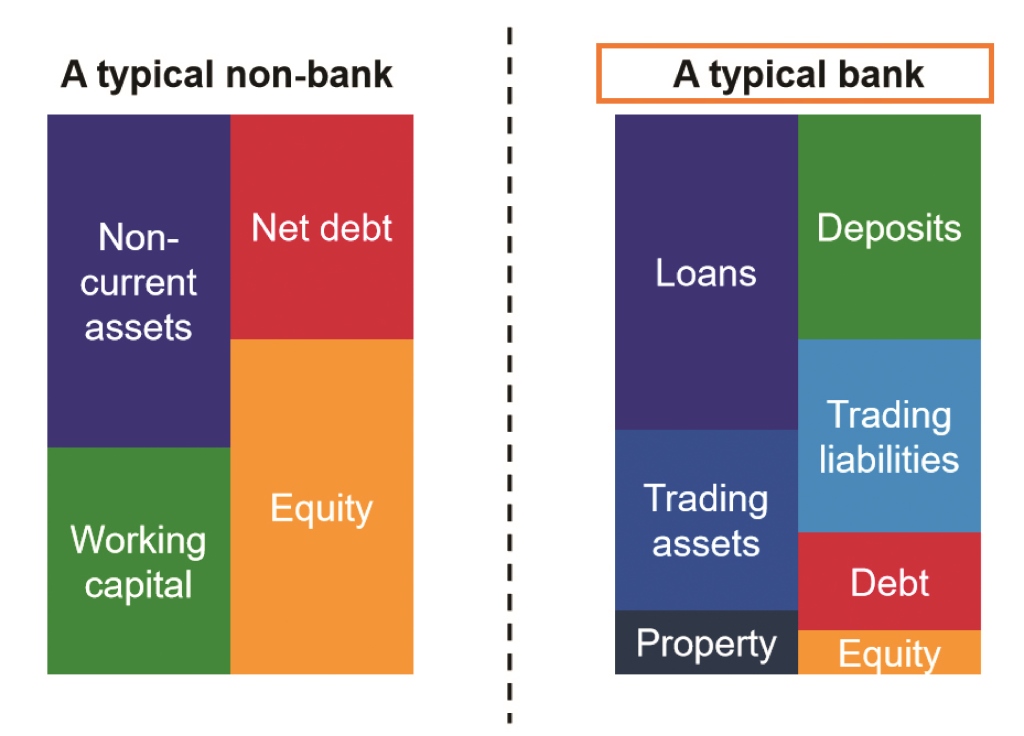
Despite impressive profitability and capital adequacy, the central banking narrative invites a critical inquiry into how capital is actually distributed across the economy. The tension between commercial lending and investments in government securities remains one of the most debated subjects among corporate executives, investors, and policymakers. Driven by attractive yields and public sector financing demands, commercial banks significantly increased their exposure to government paper. Investments in government securities expanded by 18.2 percent to reach Kshs. 2.49 trillion in December 2025, comfortably outpacing the 6.6 percent growth in net loans and advances, which stood at Kshs. 3.88 trillion.
This structural allocation pattern highlights a classic crowding-out phenomenon. While aggregate lending to the private sector has registered positive nominal growth, credit concentration remains heavily skewed toward trade, personal consumer households, and established real estate developments. Key productive sectors—such as agricultural value-addition, manufacturing, and export-driven enterprises—frequently report challenges regarding credit access and prohibitive lending rates. For bank executives and credit committees, balancing risk-weighted returns with national developmental mandates requires intentional portfolio rebalancing. Ensuring that institutional liquidity flows into productive industrial capacity rather than resting predominantly in risk-free sovereign instruments is vital for unlocking sustainable, long-term economic growth.
Navigating credit risk, asset quality, and pricing models
Managing asset quality remains a defining test for commercial banking leadership. Non-performing loans (NPLs) continue to exert pressure on institutional balance sheets, reflecting cash flow constraints among corporate borrowers and micro, small, and medium-sized enterprises (MSMEs). Loan-loss provisioning levels and credit-risk management frameworks have consequently taken centre stage in boardrooms across Nairobi’s financial district. To mitigate default risks while complying with regulatory expectations, banks have increasingly relied on advanced credit-scoring technologies and the risk-based credit pricing model anchored on the Kenya Shilling Overnight Interbank Average Rate (KESONIA).
While risk-based pricing is designed to match borrowing costs with individual risk profiles, commercial bank customers and MSMEs owner managers continue to scrutinize the actual cost of credit. High borrowing rates remain a persistent barrier for small businesses seeking working capital or expansion capital. Simultaneously, the rapid evolution of digital banking—with over 90 percent of transactions migrating outside traditional bank branches—has transformed the cost structure of financial intermediation. Digital channels and automated credit appraisal systems have lowered operating overheads for commercial banks, yet passing these efficiency gains on to borrowers in the form of lower interest rates remains a strategic imperative. As commercial banks refine their competitive positioning, their long-term success will increasingly be measured not just by quarterly pre-tax profits, but by their capacity to foster inclusive, affordable, and productive enterprise financing across the Kenyan economy.
Kenya’s Sacco movement
Moving past the conventional corridors of commercial banking, the architecture of Kenyan finance finds an equally formidable pillar in the cooperative movement. Savings and Credit Cooperative Societies (Saccos) have evolved far beyond their historical origins as modest member-funded pools into formidable financial powerhouses that rival mainstream institutional lenders in scale and impact. Operating under the regulatory oversight of the Sacco Societies Regulatory Authority (SASRA), both deposit-taking Saccos and non-withdrawable deposit-taking Saccos continue to mobilize massive amounts of domestic savings across the country. Their aggregate institutional balance sheets reflect an extraordinary capacity to generate internal capital, channeling members’ contributions directly into housing development, agricultural value chains, school fees, and MSMEs expansion.
The economic significance of the cooperative model lies in its member-centric philosophy, which intrinsically aligns resource mobilization with grassroots economic empowerment. As articulated in statutory supervisory disclosures, large-scale DT-Saccos command multi-billion-shilling asset bases, driven by steady growth in members’ deposits and share capital. This liquidity accumulation enables cooperatives to extend long-term development loans at interest rates often more favourable than those offered by traditional commercial lenders. However, this rapid institutional scaling brings complex governance and risk-management challenges. Regulatory compliance, liquidity risk management, and safeguarding members’ deposits against macroeconomic volatility have become paramount board-room discussions. Ensuring that robust governance standards keep pace with asset accumulation is essential to preserving public trust in the cooperative framework.
Furthermore, credit portfolio quality across the sub- sector demands careful navigation. While gross loan portfolios have expanded significantly, non-performing loans (NPLs) and credit-risk exposures require rigorous monitoring, particularly among agricultural and transport-aligned Saccos susceptible to seasonal cash flow shocks. To address these vulnerabilities, leading Saccos are heavily investing in digital transformation, adopting agency banking networks, mobile-money integration, and automated credit-appraisal systems. This technological modernization not only enhances operational efficiency, but also strengthens market competitiveness against commercial banks and nimble digital lenders. Ultimately, the future of cooperative finance in Kenya depends on balancing aggressive membership growth with stringent prudential compliance, ensuring that the cooperative movement remains a secure and dynamic engine of national development.

The future of microfinance
Occupying the vital intersection between formal commercial banking and grassroots entrepreneurship, the microfinance sector addresses the financing needs of individuals and micro-enterprises historically excluded from mainstream financial products and services. However, microfinance banks (MFBs) and credit only microfinance institutions (MFIs) operate in an intensely competitive environment, contending with the rise of digital credit providers, shifting customer expectations, and escalating operational costs. Evaluating the sustainability of the microfinance model requires an unvarnished examination of their financial performance, capital adequacy, and institutional funding structures during a period of considerable economic transition.
Supervisory reports outline the unique pressures facing microfinance banks as they strive to balance financial inclusion with commercial viability. Microfinance banks experienced a contraction in total assets, settling at Kshs. 55.5 billion in December 2025, alongside a cumulative pre-tax loss of Kshs. 2.91 billion. Despite these financial headwinds, proactive cost-rationalization measures and aggressive non-performing loan recovery strategies enabled microfinance banks to narrow their losses by 17.4 percent compared to the previous year, signaling an ongoing operational turnaround. Serving smaller borrowers and underserved communities inherently entails high transaction costs and elevated credit risks, making capital adequacy and access to stable institutional funding critical for long-term survival.
To remain relevant, microfinance banks and development-oriented institutions are fundamentally revising their operational models. By leveraging digital platforms, alternative credit scoring, and strategic partnerships with development finance institutions (DFIs), microfinance providers are seeking to lower operational overheads and expand their active borrower outreach. Unlike some unregulated digital credit providers that operate outside strict prudential boundaries by the Central Bank of Kenya (CBK), microfinance banks remain anchored on regulatory frameworks that prioritize consumer protection and sustainable lending practices. For microfinance professionals, the path forward relies on harnessing technological innovation to deepen MSMEs engagement, ensuring that microfinance continues to serve as an effective, commercially resilient instrument of grassroots enterprise development.
The financial institutions shaping Kenya’s economic future
The broader architecture of Kenya’s financial ecosystem extends far beyond the foundational pillars of commercial banks, Saccos, and microfinance institutions. A comprehensive evaluation of the nation’s financial depth requires examining the extensive ecosystem of insurance companies, pension funds, capital markets participants, fintech innovators, and digital credit providers. These entities perform critical complementary functions, collectively mobilizing, protecting, investing, and circulating domestic capital across the economy. Insurance companies, regulated by the Insurance Regulatory Authority (IRA), equally play an indispensable role in safeguarding businesses, households, and productive assets against unforeseen economic shocks. By absorbing risks related to agriculture, trade, and infrastructure, the insurance industry provides the foundational security required for long-term entrepreneurial risk-taking and business expansion.
Concurrently, the retirement benefits industry, under the oversight of the Retirement Benefits Authority (RBA), serves as one of the most powerful engines for domestic savings mobilization and long-term capital formation. Pension assets under management channel substantial liquidity into long-term infrastructure projects, government securities, and capital markets instruments, anchoring sustainable national development. In parallel, the Capital Markets Authority (CMA) and the Nairobi Securities Exchange (NSE) provide platforms for corporate fundraising, equity participation, and collective investment schemes, allowing businesses to access capital beyond traditional bank debt.
The integration of financial technology has further accelerated this ecosystem. Mobile money platforms, payment service providers, and licensed digital credit providers have revolutionized commercial transactions, driving financial access to unprecedented levels. Following the licensing of one hundred and ninety five digital credit providers (DCPs) and the massive expansion of mobile transaction volumes monitored by the Central Bank of Kenya, digital credit and payment infrastructure have become vital to everyday commerce. However, this digital expansion requires rigorous compliance with data protection laws overseen by the Office of the Data Protection Commissioner and strict adherence to regulatory guidelines. The synergistic relationship between traditional financial institutions and emerging fintech companies continues to redefine service delivery, ensuring that Kenya’s wider financial ecosystem remains dynamic, highly interconnected, and responsive to the evolving needs of the market.
The stability question
Synthesizing the multi-layered dynamics of commercial banks, cooperative societies, microfinance institutions, insurance providers, and pension funds brings executive focus to the ultimate test of any financial architecture: systemic stability and macroeconomic resilience. As financial institutions become increasingly interconnected through shared payment rails, digital platforms, and cross-sector investments, vulnerabilities in one segment can transmit rapidly across the entire ecosystem. Safeguarding Kenya’s financial foundation requires maintaining robust capital buffers, stringent risk-management practices, proactive regulatory oversight, and unwavering public confidence.
Overall financial soundness indicators across the banking industry—highlighted by strong capital adequacy ratios averaging 20.7 percent against a 14.5 percent statutory minimum, and liquidity ratios standing at 59.3 percent—demonstrate substantial institutional absorption capacity. Similarly, Saccos, microfinance institutions, and insurance underwriters maintain prudential reserves designed to buffer against unexpected shocks. However, macroeconomic headwinds warrant continuous vigilance. The interplay between public debt levels, government domestic borrowing, and private-sector credit growth continues to influence domestic liquidity distribution. Furthermore, managing rising non-performing loans (NPLs), household indebtedness, and credit concentration risks remains a collective priority for institutional boards and risk officers.
Beyond credit and liquidity risks, modern financial stability demands robust defense against operational, cybersecurity, and climate-related threats. As digital banking and mobile transactions scale, protecting institutional infrastructure from sophisticated digital fraud and ensuring strict compliance with cybersecurity mandates are non-negotiable operational requirements. Concurrently, emerging climate-related financial risks—such as weather shocks impacting agricultural loan portfolios and insurance liabilities—require financial institutions to integrate environmental risk assessment into their underwriting and lending frameworks. Ultimately, safeguarding Kenya’s economic future depends on seamless collaboration among financial institutions, regulatory bodies, and policymakers, ensuring that the financial system retains the structural fortitude to withstand future economic shocks while continuing to fuel productive, long-term national development.
A collective blueprint for Kenya’s financial future
Financial stability is neither the exclusive responsibility of the Central Bank of Kenya nor the sole mandate of individual regulatory authorities. Rather, it represents a collective responsibility shared across every institution that mobilizes savings, extends credit, manages investments, facilitates payments, or provides financial protection. As Kenya’s financial architecture scales new heights, the imperative for synchronized institutional accountability has never been more pronounced. Commercial banks must judiciously balance robust profitability with responsible capital allocation that actively fuels productive industrial sectors. Saccos must continue to strengthen internal governance, financial accountability, and the absolute protection of members’ deposits. Microfinance institutions are challenged to prove that profound financial inclusion can successfully coexist with commercial sustainability. Insurance underwriters must reinforce risk protection and claims reliability, while pension funds safeguard long-term retirement savings while catalyzing productive investments. Furthermore, fintechs and digital credit providers must prioritize responsible innovation, consumer protection, and strict data security, while capital markets institutions deepen access to long-term investment capital.
Regulators and policymakers, in turn, hold the vital mandate of providing a harmonized, coordinated framework that encourages technological innovation, strengthens prudential supervision, fosters healthy market competition, and safeguards the stability of the entire financial system. The ultimate call to action for Kenya’s financial services industry is to transcend mere institutional balance-sheet growth and commit unequivocally to a stronger, more productive, and thoroughly resilient national financial architecture. Ultimately, the country’s economic future depends not merely on the sheer size of its financial institutions, but on their collective, unyielding ability to finance vital businesses, protect hard-earned savings, manage complex risks, and support sustainable economic development across East Africa.


