


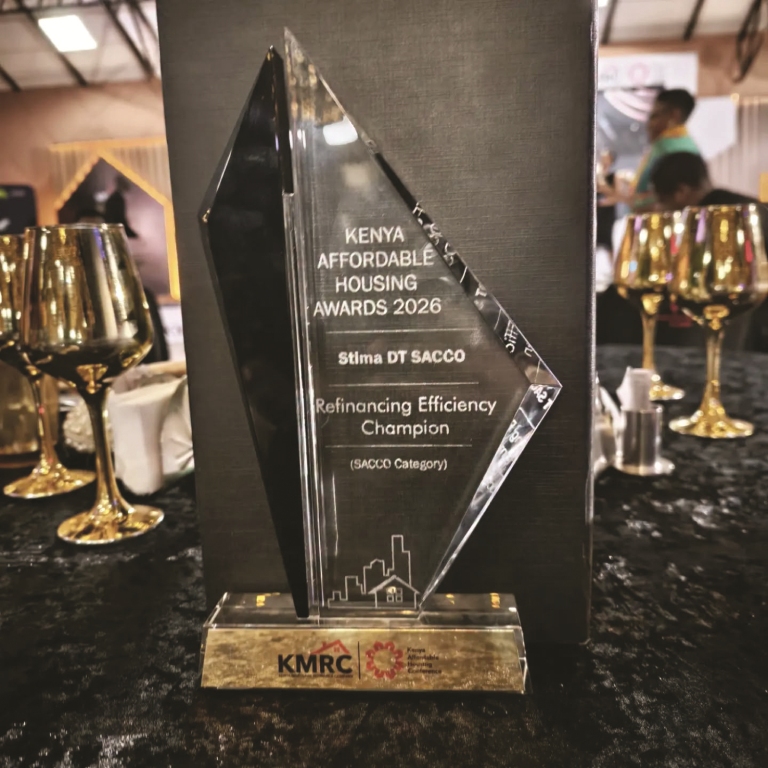
For the majority of people living in Kenya, home ownership is one of their life’s most important financial ambitions. However, since buying and developing homes require money that may be difficult for many households to raise due to the high prices of land and construction material costs, the process might take several years before they reach their goal. Saccos have therefore started to fill in the gap by offering members home financing options. The increasing involvement of Saccos in financing of properties poses a critical question regarding whether they are facilitating access to home ownership or are merely offering credit facilities to those in a financial position to own a property.
The latest industry statistics show that Saccos are emerging as significant players in financing housing in Kenya. According to a report by SASRA, the total amount of funds disbursed by regulated SACCOs in housing and land loans was Kshs. 137.1 billion in 2024 compared to Kshs. 126.1 billion in 2023. In 2024, Kshs. 67.33 billion of the total amount was facilitated in financing the purchase and construction of houses.
These numbers demonstrate an increasing demand for funding in connection with property by Sacco members. In addition, it demonstrates the use of cooperative funding in a market where mortgages are inaccessible to many prospective home owners. The reality for many Kenyans is that ownership of a home does not necessarily begin with purchasing a ready-made home.
The journey from land ownership to homeownership
Homeownership begins by purchasing a piece of land and building on it slowly depending on the availability of finances. That is where Saccos have established a strong presence, enabling members to borrow against their savings and other qualifying arrangements to purchase land. A research conducted by Financial Sector Deepening {FSD} Kenya in November 2025, together with SASRA and the Kenya Mortgage Refinance Company (KMRC), into financing of land and housing by Saccos found that acquisition of plots is one of the major reasons for borrowing to finance land transactions.
This is how most families go about owning property. Instead of saving all the funds needed to own a finished house, a family member can acquire land in an area under development and then construct in stages. This strategy helps in sharing the cost burden over time.
Acquiring land is just one step towards realizing your dream. Building a house entails more costs from the payment for labour, electricity, materials and other related costs. Those members that underestimate such expenses will be left with land that they will not be able to build on, or even projects taking too much time to be completed. In the case of Saccos, however, the potential goes beyond financing of land acquisitions. It exists in creating housing products that assist in advancing the members from owning plots to fully constructed houses.
Kenya Mortgage Refinance Company {KMRC}partnership creates new opportunities
Another significant stakeholder in the development of housing finance is the Kenya Mortgage Refinance Company. The company offers the participating financial institutions long-term funds through mortgage refinancing to enable them to issue mortgages that have better repayment arrangements. According to Kenya Mortgage Refinance Company in March 2026, the participating banks and Saccos borrowed additional Kshs. 7.7 billion in 2025, and the total borrowing stood at Kshs. 19.6 billion. The refinance helped in providing over 5,000 mortgages.
For the Saccos, long-term financial arrangements could be helpful in tackling the problem of financing the housing project which takes a number of years to settle the payments. For the eligible customers, the possible advantage would be low instalments and availability of mortgage schemes at different interest rates and periods.
However, refinancing is not always sufficient in ensuring affordability for all properties. This is because there will always be a requirement of meeting the institutional requirements, the ability to repay the loan and adhere to the terms of the loans. Saccos also have to ensure proper management of finances. The opportunity exists in integrating the co-operative system of saving with financing systems that are sustainable and can help finance bigger housing schemes.
Helping members own homes
The increased need for land and property financing offers Saccos a chance to improve their position in the Kenyan property industry. However, continued growth will require more than just increasing the amounts of loans issued. Institutions must evaluate the borrowers well, give clear information on the rates of interest and other fees, and make sure repayment periods match members’ financial status. Members, on the other hand, must compare different loan conditions, prove land ownership and calculate construction costs before buying a piece of land. Collaborations with reputable developers and housing finance firms might also assist Saccos in making suitable housing schemes available to their members. In some cases, this might even offer their members alternatives; other than buying land and constructing buildings independently. In the cooperative sector, the most important thing is the number of members that can purchase and build houses without jeopardizing their financial sustainability in the future.
The business challenge behind housing finance
In spite of the rise in the value of Sacco loans for land and housing, their proportion to total loans dropped. According to the 2024 Supervision Report by SASRA, the proportion of Sacco loans in land and housing stood at 25.26 per cent in 2024 compared to 26.97 per cent in 2023. This means that even though more finances are being placed into real estate financing, there are also other industries competing for their members’ credit. Education, business ventures, agricultural activities, and other domestic purposes are still major sources of Sacco financing. Saccos also make housing financing a long-term business strategy. While loans to property owners help establish ties with members and earn some income from interest, they lock up resources for a longer period of time. There is need to strike a balance between the housing aspirations and borrowing capacity.
What this means for the cooperative sector
Saccos have become a very crucial avenue for Kenyans to access money to purchase land and develop their homes. The increase in lending, as well as the development of mortgage products, indicates that there is a key place for cooperatives in increasing property ownership. However, the increase in mortgage loans must not be mistaken for universal affordability. The mortgage loan can provide an avenue for property ownership, but at the same time, it may lead to a financial challenge if one is unable to construct the property and make repayments. The next step for Saccos would be to evolve from financing land plots and buildings to providing more complete and sustainable solutions for housing. For Sacco members, the aim is not just to purchase land or obtain a mortgage loan. The aim is to construct a house that they can afford to build, manage and live in with financial assurance. How Saccos can make this dream a possibility for more people will be the measure of how much impact they will have on Kenya’s housing market.


