


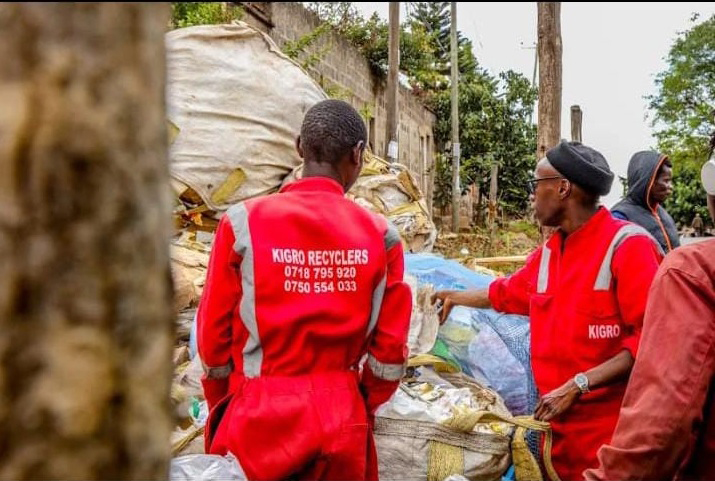
Before Nairobi is fully awake, members of Kigro Recyclers are already at work. Along the busy neighbourhood streets of Kenya’s capital, young men and women in high-visibility reflective jackets move methodically from household to household, collecting what others have discarded as waste. Plastic is sorted, collection routes are mapped, and materials are loaded, transported, and separated for recovery.
At first glance, this routine resembles municipal waste collection. Look closer, however, and a consequential enterprise is taking shape, one that is recovering industrial resources, creating resilient livelihoods, and giving communities a direct equity stake in the businesses operating within them. This is the operational space occupied by Kigro Recyclers Worker Cooperative.
Across East Africa, the green economy has undergone a decisive transition from an aspirational policy framework to a core commercial driver of the cooperative sector. For member-owned enterprises, this shift represents a strategic inflection point. Confronted by converging pressures around climate volatility, resource scarcity, regulatory realignment under environmental, social, and governance (ESG) frameworks, and persistent structural youth unemployment, cooperatives are recalibrating their market positioning.
Enterprises are migrating beyond traditional financial services and savings mobilization to become active participants in the production, aggregation, and commercialization of circular products and eco-friendly services. The strategic implication for the broader cooperative movement is unambiguous. Future relevance will be determined not merely by the volume of the services provided to members, but by the capacity to supply processed green materials into formal, ESG-compliant industrial value chains.
Turning a problem into an enterprise
In Nairobi, Kigro Recyclers Worker Cooperative provides a practical illustration of this operational shift. Incorporated in 2019 by twenty young entrepreneurs with foundational support documented by Global Communities, Kigro was established as a youth-led waste management cooperative during a severe economic contraction marked by municipal service deficits and widespread job displacement.
As Rogers Rombe, chairman of Kigro Recyclers, notes, the cooperative’s core value proposition was straightforward yet commercially impactful: organize young people around an essential environmental service, build a member-owned enterprise, and convert municipal waste from a costly disposal burden into a valuable economic resource.
What has emerged is a resilient enterprise model operating at the intersection of employment generation, environmental stewardship, and cooperative ownership. As its members demonstrate, worker-owned enterprise can successfully aggregate decentralized, grassroots labour into commercially viable green products, establishing a sustainable mechanism that retains economic value directly within the communities where it originates.
Where workers become owners
Within the cooperative model, the conventional divide between labour and capital is substantially eliminated. Each member functions simultaneously as a worker, owner, and governor of the business. Consequently, strategic decisions, ranging from daily route optimization to long-term capital allocation, are directly informed by the operational reality of the workforce executing them.
This governance model provides a distinct commercial advantage. Rather than merely supplying labour to an external employer, members hold an equity stake in an enterprise whose financial performance directly dictates the value created and retained. Kigro’s trajectory underscores a core principle of inclusive green growth. By anchoring operations in member ownership, the cooperative proves that informal waste management can be structured into a disciplined, market-facing participant in the circular economy.
Ultimately, this shift extends far beyond local waste recovery. It confronts the broader cooperative movement with a vital strategic question: can member-owned enterprises actively shape and capture value within emerging sustainability markets, rather than passively adapting to them? Kigro’s commercial model demonstrates that they can.
Bridging informal work and formal markets
The clearest indicator of Kigro’s commercial evolution lies in its redefined understanding of what constitutes a product. By transitioning from door-to-door waste collection for a structured fee to centralized sorting and direct business to business supply agreements with industrial manufacturers, the cooperative offers a practical demonstration of the circular economy in action.
While conventional models treat waste as end-of-life material destined for disposal, circular economic logic reverses this framework—reclaiming discarded materials as high-value inputs that are recovered, processed, and reintroduced into productive manufacturing systems. For Kigro, this strategic shift extends well beyond estate cleaning and basic solid-waste management. The cooperative’s operational mandate now encompasses material aggregation, segregation, upcycling, composting, and the integration of recovered resources into industrial supply chains.
This transition marks a critical commercial milestone for the cooperative sector. While a collection business functions primarily as a service provider, a resource-recovery enterprise actively participates in an industrial value chain—fundamentally elevating its revenue potential. By diverting post-consumer waste from landfills and supplying processed raw materials back into the production cycle, Kigro positions waste as a valuable industrial asset rather than an environmental liability, generating simultaneous ecological and financial returns.
The strategic growth opportunity lies in capturing higher margins at every stage of the recovery lifecycle. Collection establishes the primary sourcing pipeline, while segregation raises material purity and quality. In the same vein, aggregation generates the scale required for corporate contracts, and processing increases industrial utility. Finally, downstream offtake partnerships secure long-term business to business markets.
The further the cooperative advances along this chain, the more effectively it transitions from a transactional service provider into a dependable supplier of recovered raw materials. For Kigro Recyclers, the strategic imperative is no longer simply collecting larger volumes of waste, but extracting maximum productive value from resources that were previously written off as economically obsolete.
Why the cooperative model matters
At the core of Kigro’s operating model is its youth-led ownership structure. Founded to address the severe employment pressures facing young people, the cooperative embeds youth participation directly into its core enterprise architecture rather than treating it as an auxiliary social initiative.
Alex Kariuki, the treasurer of Kigro Recyclers, notes that he joined the venture after struggling to secure formal employment despite completing tertiary education. “ Before I joined Kigro Recyclers, I was a student at the University of Nairobi pursuing a degree in sociology but after completion, I failed to secure a formal job and turned to Kigro for employment,’’says Kariuki. For Kariuki and his peers, the cooperative provided reliable employment while measurably elevating their socio-economic living standards.
Governed democratically by its members, Kigro institutionalizes youth leadership, gender mainstreaming, and financial inclusion as foundational operational principles. By actively driving gender balance across its membership and integrating internal savings and credit mechanisms, the cooperative extends its impact beyond daily employment—building a collective financial safety net that strengthens long-term resilience.
The business implications of this model are profound. A workforce with direct equity in the enterprise possesses an intrinsic stake in its operational continuity, productivity, and profitability. Democratic ownership converts workers from passive wage earners into equity-holding stakeholders actively participating in corporate governance. This fundamental alignment reshapes the relationship between labour performance and enterprise returns.
Ultimately, Kigro’s environmental mandate is inseparable from its social and economic objectives. The commercial value generated through resource recovery circulates directly within the communities where the labour and materials originate. In this respect, Kigro is doing more than supplying processed green inputs to market—it is establishing a scalable ownership architecture for inclusive green growth across the continent.
The capital question
Kigro’s model directly targets the systemic divide between formal municipal systems and informal labour; one of the most persistent structural challenges in urban waste management. Resource collection and recovery heavily depend on decentralized workers operating at the household and business levels. However, when this activity remains fragmented, workers face income volatility, weak market bargaining power, and severe barriers to capital and institutional buyers.
The cooperative model provides an effective structure for organizing this labour without stripping away its community-rooted foundation. Spurred by municipal collection deficits and the economic shocks of the COVID-19 pandemic, Kigro, supported in part by global development partners, formalizes workers who previously operated in isolation. As Charles Owiti, a member from the cooperative explains: “ The hotel I was working for collapsed as a result of the economic shocks of COVID-19 pandemic I therefore resorted to working with KigraRecyclers.” This creates an accessible entry point for youth employment while simultaneously fulfilling a vital public utility.
From a commercial standpoint, the enterprise’s core strength lies in operational aggregation. Individual operators suffer from limited capacity to negotiate enterprise contracts, acquire capital equipment, or secure large-scale buyers. But cooperative aggregation pools labour, savings, assets, and operational capabilities into a unified commercial entity.
This collective structure delivers a dependable, coordinated service model that builds trust with residential estates, municipal bodies, and corporate off-takers. Formalization in this context does not mean replacing grassroots initiatives with rigid, distant corporate bureaucracies. Instead, it equips community-based workers with the governance, organizational structure, and commercial credibility required to compete in institutional markets. Kigro demonstrates how cooperatives can serve as a vital bridge, connecting informal economic activity directly to formal green value chains.
A bigger opportunity for cooperatives
The primary competitive advantage of Kigro’s enterprise model lies in its deep proximity to the communities it serves. While traditional businesses often operate at a distance, cooperatives build their market position on foundational social capital rooted in trust, shared purpose, and active member participation.
Unlike external contractors, Kigro’s worker-owners live and operate directly within the neighbourhoods where the enterprise functions. This community embeddedness delivers immediate operational benefits, giving members a firsthand understanding of localized collection routes, waste generation patterns, and neighbourhood dynamics.
Furthermore, this close physical presence fosters a higher standard of service reliability, as worker-owners are directly accountable to their neighbours and local stakeholders. At the same time, operating locally reduces mobilization costs and enables rapid response times for municipal and estate clients.
Ultimately, this localized structure creates an agile organizational moat that extends far beyond routine service delivery, successfully converting community trust into a sustainable commercial advantage.
ESG implications
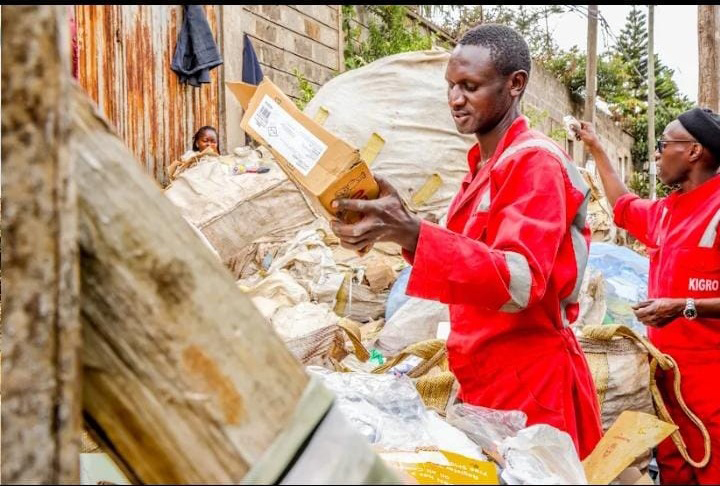
Kigro’s cooperative structure carries direct implications for environmental, social, and governance (ESG) integration across corporate supply chains. As institutional investors, commercial lenders, and corporate partners demand verifiable sustainability metrics, the ability to trace material origin, document processing standards, and audit socio-economic impact has become essential.
For manufacturers operating under extended producer responsibility (EPR) regulations, worker cooperatives offer a reliable bridge between corporate compliance obligations and community-based recovery networks. Kigro’s community-anchored model seamlessly aligns grassroots environmental action with high-level corporate ESG agenda.
This alignment establishes a strategic convergence between cooperative enterprise growth and corporate sustainability mandates. First is environmental: diverting post-consumer waste from landfills through structured circular recovery and raw-material processing. Then social: generating stable youth employment, advancing gender equity, and retaining financial returns within local communities through shared equity. Finally is governance: enforcing transparent member accountability, democratic oversight, and equitable profit distribution.
Together, these interconnected pillars form a market-ready operational model that directly satisfies the compliance and transparency expectations of modern capital markets and corporate value chains.
Future proofing
Green transformation requires more than ambition; it demands capital. Securing processing equipment, logistics fleets, digital traceability tools, and technical capacity requires substantial investment that remains prohibitive for isolated informal operators. Collective ownership fundamentally changes this financial equation.
By aggregating members’ savings and pooling equity, Kigro Recyclers deploys logistics and processing infrastructure at a scale unattainable for individual operators. Resource pooling builds a resilient capital base for asset acquisition while distributing operational costs and financial risks across the entire membership.
This collective financial architecture underpins enterprise resilience. Rather than forcing individual workers to absorb income volatility and shifting operational expenses, the cooperative mobilizes capital systematically to buffer market shocks. Consequently, this safeguards both business continuity and members’ welfare.
Crucially, collectively owned infrastructure remains under worker control. Productive assets function as a permanent economic base for the cooperative rather than external, debt-heavy burdens. Kigro’s model demonstrates a viable framework for enterprise endurance: build productive capacity collectively, retain asset ownership internally, and distribute the resulting value equitably through the cooperative structure.
Engineering resilience
Community-level resilience requires operational systems capable of absorbing macroeconomic, climatic, and institutional disruptions. Kigro Recyclers integrates several structural mechanisms into its business architecture to build this systemic endurance.
The enterprise’s decentralized service footprint ensures operational continuity across Nairobi and Kajiado counties, insulating client communities from municipal service deficits. By prioritizing localized value retention, the cooperative prevents capital flight, anchoring wealth directly within the primary collection zones. Simultaneously, embedding youth leadership and gender equity creates an adaptable workforce capable of responding to evolving market demands.
Sustainable cooperative expansion requires more than expanding membership or increasing raw collection volumes; it demands rigorous operational systems that ensure commercial predictability and institutional credibility. Within modern green markets, data capture and material traceability have shifted from administrative burdens into core commercial assets.
For institutional investors, corporate buyers, and regulatory bodies, green product claims must be backed by auditable metrics. By investing in reliable inventory records and supply-chain traceability, Kigro reinforces partner confidence and secures its position in formal markets. This operational rigor highlights a vital evolution for grassroots enterprises—transitioning from informal, subsistence-driven survival into structured, market-ready businesses built for the green economy.
Market opportunity
The market opportunity for Kigro and similar worker cooperatives is shaped by the convergence of three macroeconomic forces: escalating environmental pressures, tightening regulatory expectations, and the urgent demand for inclusive youth employment.
As corporate entities face growing pressure to reduce their environmental footprints, regulators enforce stricter sustainability standards, and institutional investors prioritize ESG performance, national economies like Kenya must simultaneously generate productive opportunities for a growing youth demographic. The circular economy operates precisely at the intersection of these priorities, allowing enterprises to recover value from waste streams while creating formal employment and new industrial supply chains.
For the cooperative movement, the strategic imperative is to expand both upstream and downstream within these emerging value chains. Rather than remaining confined to low-margin collection services, member-owned enterprises can aggregate materials, invest in processing capabilities, secure direct business to business contracts, and supply processed green inputs directly to formal markets.
Unlocking this scale requires strategic corporate and institutional partnerships. Accelerators, impact investors, and industrial buyers offer the technical expertise, growth capital, and market access needed to transition grassroots enterprises into integrated commercial actors. Ultimately, as Kenya expands its green economy, Kigro’s model demonstrates that industrial sustainability need not be exclusively capital-intensive or corporate-led—proving that cooperatives can successfully supply formal markets while retaining value for their member-owners.
Ownership pivot
Kigro’s trajectory signals a major evolution within the broader cooperative movement. This is the scaling of the green economy through member-owned enterprise. For decades, cooperatives across East Africa have served as foundational vehicles for mobilizing savings, organizing agricultural producers, extending credit, and building collective bargaining power. The next strategic frontier lies in their active participation in sectors driven by sustainability, resource efficiency, and technological adaptation—an opportunity perfectly embodied by the circular economy.
Member-owned enterprises are uniquely structured to organize economic activity where value generation relies on widespread, collective participation. Their democratic architecture enables workers and local communities to participate directly as equity owners rather than remaining marginalized at the bottom of the value chain. Kigro Recyclers demonstrates the practical power of this model applied to environmental services by organizing youth labour around a pressing urban environmental challenge, transforming workers from informal wage earners into equity-holding stakeholders.
Furthermore, operations shift from passive waste collection to active resource recovery, reclaiming commercial value from discarded materials and expanding the enterprise’s revenue margins. Beyond generating basic income, this model creates a sustainable financial structure that retains equity and earnings directly within the operating community.
The deeper strategic significance of Kigro Recyclers lies in how it challenges the belief that green growth must be exclusively capital-intensive or corporate-driven, proving that resilient green ventures can emerge from the very communities closest to the challenges being solved. By stepping in to bridge municipal service deficits, worker cooperatives offer multi-dimensional value across the economy. They provide municipalities with reliable waste management systems, supply industrial manufacturers with traceable raw materials, offer institutional investors verifiable channels for ESG capital, and chart a clear path for young workers from informal labor to enterprise ownership.
The strategic direction for the sector is unambiguous. Cooperatives must transition from being viewed as informal service providers or operational cost centres into high-value, revenue-generating nodes within modern industrial value chains.
Ownership as an operating principle
Kigro Recyclers demonstrates the commercial and social viability of building green products on a foundation of member ownership. Their trajectory begins with municipal waste but extends far beyond simple disposal. Within this model, waste is redefined as an industrial resource, informal labour is institutionalized into a structured enterprise, and workers are elevated to equity owners. Community participation becomes a tangible commercial asset, while environmental responsibility functions as a primary engine for value creation.
This strategic convergence gives the cooperative model its distinct relevance in today’s corporate landscape. In a regional market increasingly governed by sustainability mandates, ESG expectations, and supply-chain transparency, worker cooperatives like Kigro are moving from the periphery of policy discussions to central positions within formal industrial supply chains. However, their long-term growth will ultimately depend on their continued ability to translate this social purpose into disciplined, commercially sustainable operations.
The future trajectory of green enterprise will not be determined solely by the products generated. It will be shaped by the ownership structures underpinning production, the local communities capturing the resulting financial value, and the institutional partners capable of connecting grassroots enterprises to formal business to business markets. Kigro’s experience offers a compelling template for this market shift—a framework where environmental resilience originates at the grassroots, economic value is retained closer to its source, and workers actively participate in the ownership of the enterprise itself.
For the cooperative movement, this represents far more than an environmental initiative. It offers a new model of green enterprise—one in which sustainability, commercial discipline, and member ownership serve as mutually reinforcing foundations for long-term economic growth.
Redefining cooperative value in Kenya’s green economy
Kigro Recyclers is strategically positioned at the forefront of Kenya’s transition to a green economy, converting post-consumer waste into high-value economic assets. Through structured recycling and material processing, the cooperative mitigates environmental degradation, drives resource efficiency, and creates sustainable, equity-driven employment for local youth and community members.
This trajectory reflects a broader evolution across the cooperative movement, marked by a shift toward high-impact, member-owned enterprises. Modern cooperatives are increasingly aligning operational strategy with sustainability, social equity, and inclusive growth. By leveraging collective ownership, resource pooling, and democratic governance, Kigro delivers measurable environmental outcomes alongside shared commercial prosperity—underscoring the role of cooperatives as vital engines of community resilience and industrial sustainability.
Ultimately, by bridging environmental stewardship with economic empowerment, Kigro Recyclers provides a compelling blueprint for how worker cooperatives can lead regional green growth, strengthen localized supply chains, and build resilient community economies.


