


Driven by a growing commitment to addressing plastic waste, Jackson Gichuhi is steadily advancing a manufacturing enterprise that transforms environmental challenges into structured, sustainable solutions
By George Gichuki
In a country battling with increasing plastic waste and environmental degradation, Jackson Gichuhi chose action over observation. While many walked past plastic-clogged rivers and overflowing dump sites, Gichuhi paused, not to complain, but to develop solutions. What began as a personal concern for environmental pollution has since evolved into Giplast Kenya Limited, a plastic recycling company that is steadily reshaping how waste plastic is perceived and managed within Kenya’s circular economy.
Today, Giplast operates across Murang’a, Kirinyaga, Nyeri, Embu, and Laikipia counties, purchasing waste plastic from vendors and collectors, sorting it, recycling it, and returning it to the market as a valuable raw material. Through this process, Gichuhi has transformed plastic waste from an environmental threat into an economic resource, one that supports livelihoods, protects ecosystems, and fuels sustainable industries.
A vision born from curiosity
The foundation of Giplast was laid in 2020, a year marked by uncertainty and global disruption. As COVID-19 brought economies to a standstill, Gichuhi found himself reflecting on the environmental realities around him. Kenya had already banned plastic carrier bags, yet hard plastic waste continued to accumulate in alarming quantities, often ending up in dump sites, rivers, and open fields.“I kept asking myself what really happens to all this plastic,” he recalls.
Driven by curiosity and self-initiative, Gichuhi traveled to India, where he attended an international exhibition on waste plastic recycling. For four days, he immersed himself in learning; observing advanced recycling systems, interacting with industry players, and understanding how waste plastic could be processed efficiently and profitably. What he witnessed was transformative.
“In India, plastic recycling is structured, organized, and treated as a serious industry,” he says. “That experience helped me understand that this was something we could also do in Kenya.” Armed with new insight and a renewed sense of purpose, Gichuhi returned home determined to act.
Turning an idea into a viable enterprise
Upon returning to Kenya, the contrast was clear. Plastic waste was widespread, yet recycling efforts were minimal. Most waste was collected only to be dumped, with little emphasis on reuse or value addition. Gichuhi identified a gap; not only in infrastructure, but in mindset. Consequently, he began developing a plan to establish a plastic recycling plant. However, like many enterprises, financing became the greatest obstacle. The idea was solid, but capital was scarce.
Fortunately, he got an opportunity where he least expected it – a television advert. Kenya Development Corporation (KDC) was inviting entrepreneurs to apply for startup loans. Without hesitation, he visited their offices on the very day the government announced COVID-related lockdowns.Although offices were shutting down, he was advised to prepare a proposal and submit it. That moment became his turning point.
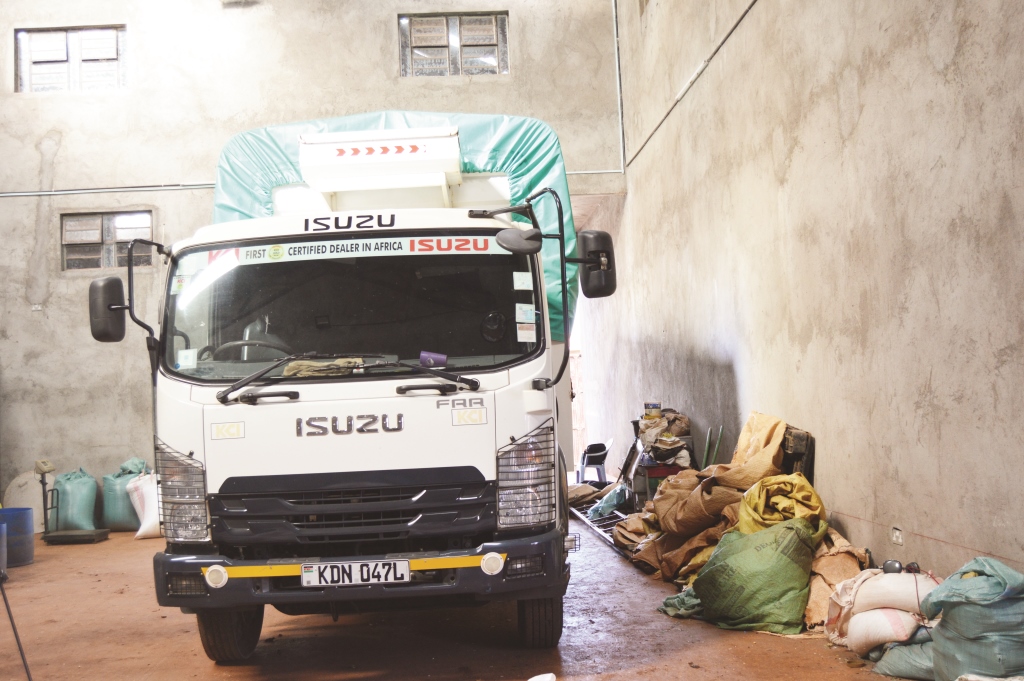
Gichuhi spent the lockdown period drafting and refining a comprehensive business proposal. When KDC reviewed it, they approved a 50% project financing, amounting to Kshs. 16.5 million, to cover machinery, recycling equipment, and a lorry for transport. His contribution would involve securing land, constructing the facility, and covering professional costs.
Building Giplast from the Ground Up
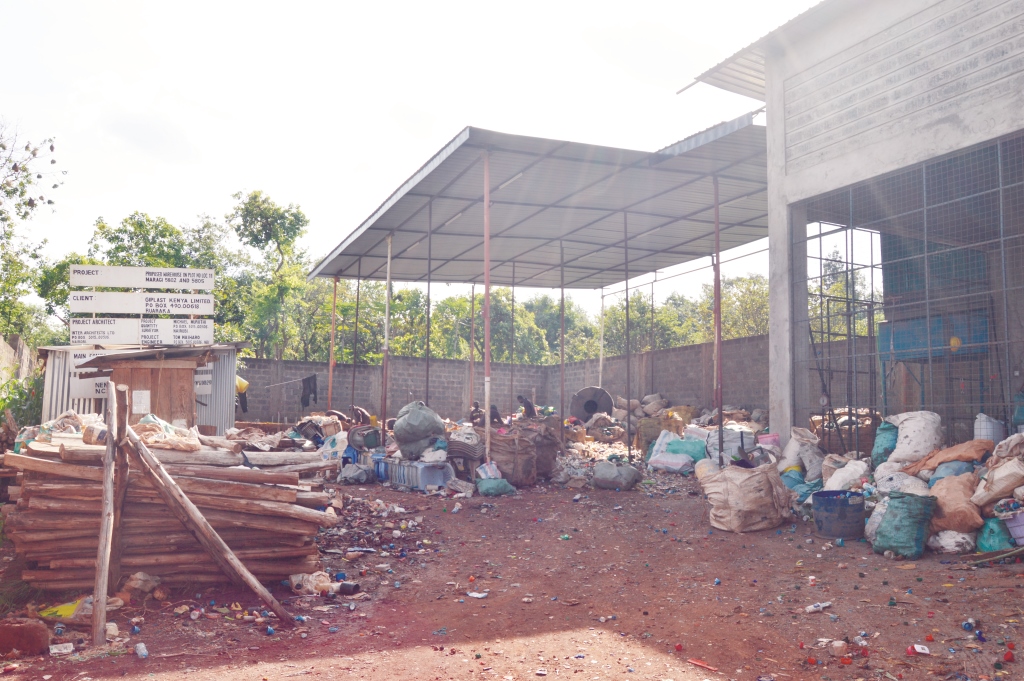
To raise his share, Gichuhi purchased a quarter-acre of land near Murang’a town from his father. Construction of the facility began soon after, with careful attention to building a functional space for recycling operations. Setting up the factory involved installing equipment, organizing workflow, and ensuring clear roles and responsibilities for staff to maintain efficiency and accountability.
Despite the challenges of capital and logistics, Gichuhi’s hands-on approach and structured planning ensured that progress continued steadily. By the time the facility was ready and operations commenced, Giplast had established a solid operational foundation, paving the way for future growth and strategic partnerships that would support the company’s expansion and stability.
How Giplast brings the circular economy to life
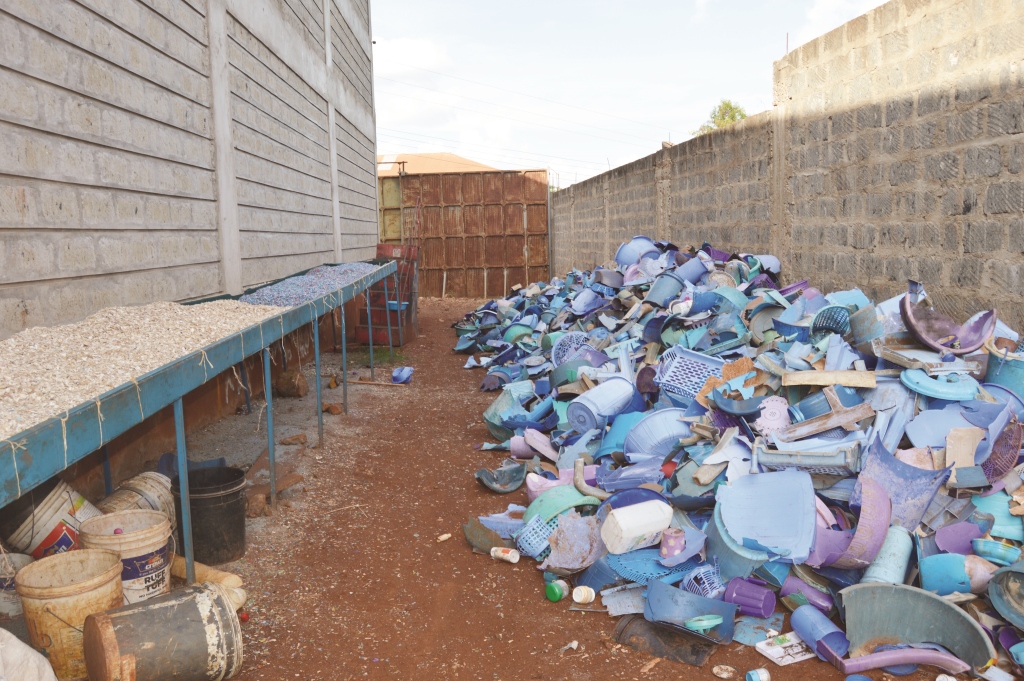
At the heart of Giplast’s operations is a simple yet powerful process. The company sources waste plastic directly from collectors, vendors, and dump-site sorters across its catchment area. Once delivered to the factory, the plastic is meticulously sorted by type and colour, ensuring quality and consistency.
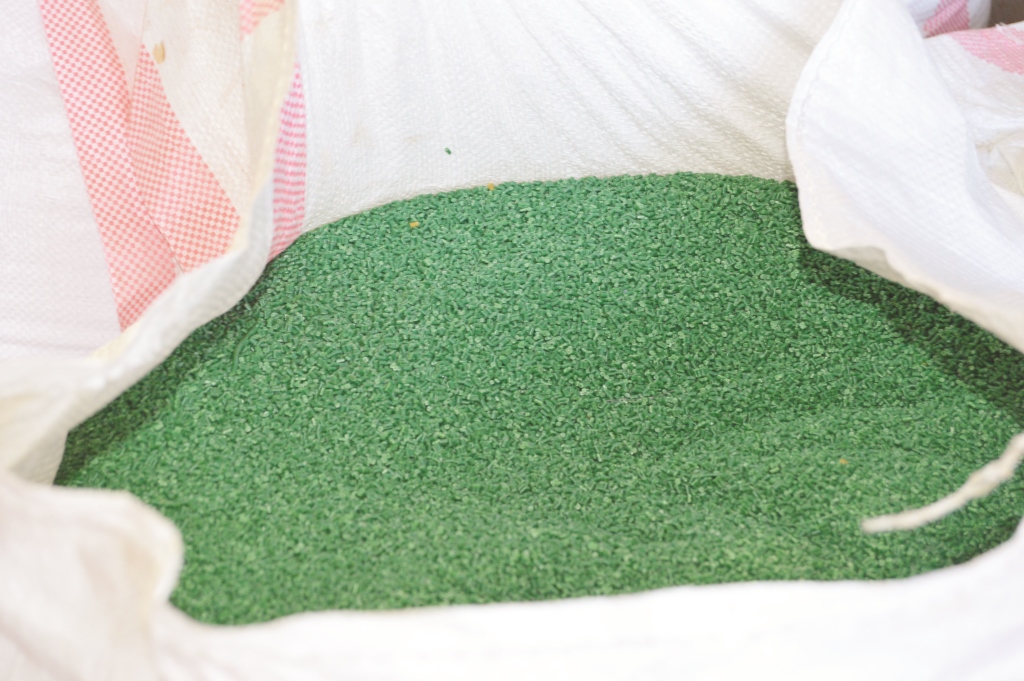
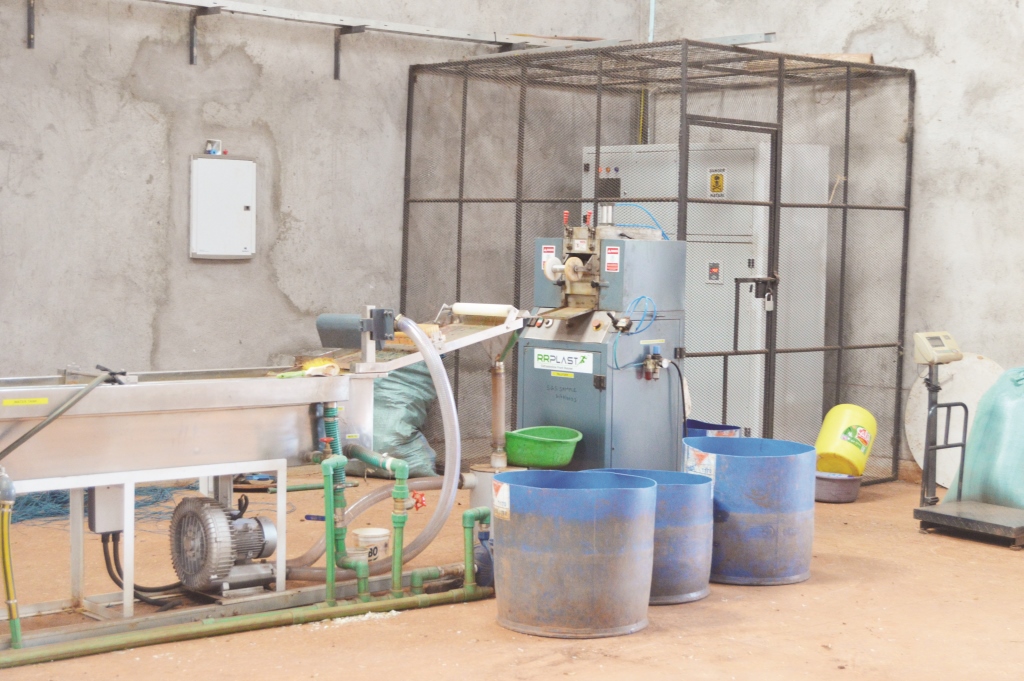
The sorted plastic is then processed by state of the art machines, converting it into plastic granules and pellets. They are then sold to manufacturers who use them to produce new plastic items. Once back to the market, these items are used by consumers, discarded again, and ultimately re-enter the recycling process. This continuous loop is what defines the circular economy.
Since commencing operations, Giplast has steadily grown. From processing one thousand to two thousand kilograms per week in the early stages, the company now recycles approximately five thousand kilograms of waste plastic every week. Its target is to process nine thousand kilograms weekly in the near future.
Transforming lives and strengthening communities
Beyond environmental gains, Giplast has become a source of employment and community empowerment. The company has employed a manager, a caretaker, a driver, and over thirteen workers involved in sorting, collection, and sales. Importantly, most of these employees are drawn from the local community, strengthening social ties and creating shared ownership of the project.
Giplast has also emerged as a learning and benchmarking hub, welcoming schools and institutions interested in understanding industrial recycling and environmental conservation. Through these engagements, Gichuhi is nurturing environmental awareness among younger generations. The company’s role extends beyond business. It actively participates in community development initiatives and fundraising efforts. For instance, it is currently supporting the establishment of a police station in the locality.
Environmental stewardship and regulatory support
Environmental conservation remains central to Giplast’s mission. To that end, the company works closely with the National Environment Management Authority (NEMA), maintaining valid licenses and conducting regular environmental audits. This commitment has earned recognition, including invitations to participate in national environmental exhibitions.
By collecting plastic from dump sites and preventing it from entering rivers, Giplast contributes directly to: reduced land and water pollution, cleaner rivers and safer ecosystems as well as reduced reliance on wood-based products, supporting forest conservation. The result is a measurable improvement in environmental quality.
Overcoming challenges with strategy and consistency
Like many capital – intensive enterprises, Giplast has faced significant challenges. Recycling equipment is costly, daily operations require substantial cash flow, and raw materials must be purchased on a cash-on-delivery basis.
To remain competitive in a growing market, Giplast has adopted a policy of payment on delivery, reliability, and consistency. Suppliers trust the company because it pays promptly, adheres to schedules, and responds quickly when materials are available.
Training staff remains an ongoing priority, as plastic sorting requires technical knowledge and specialization. Nevertheless, Gichuhi views these challenges as opportunities for growth rather than setbacks.
The role of Progressive Credit in sustained growth
Once the factory was underway, accessing timely financing became critical to ensure that Giplast could move from construction to full operations without delays. Progressive Credit provided strategic support during this crucial stage, enabling Gichuhi to complete the facility, instal the recycling equipment, and set up transport logistics efficiently. According to Gichuhi: “The support allowed us to move forward without stalling the project. Once operations started, everything else began to fall into place.”
With the facility operational, Progressive Credit continued to provide working capital support. Recycling operations require prompt cash payments to collectors and suppliers, making liquidity essential.
Access to ongoing financing allowed Giplast to maintain a cordial working relationship with suppliers, pay promptly, and operate smoothly without interruptions. Gichuhi notes that having reliable financial backing gave him the confidence to focus on improving processes, training staff, and ensuring consistent quality throughout the operation.
This ongoing support helped the company expand its processing capacity from between 1,000 and 2,000 kilograms of plastic per week in the early stages to around 5,000 kilograms per week today, with plans to reach 9,000 kilograms in the near future. Beyond the numbers, Progressive Credit’s partnership allowed Giplast to establish credibility in the market, secure new suppliers, and build strong relationships with collectors. By providing fast, reliable, and flexible financing, Progressive Credit has played a pivotal role in stabilizing operations, supporting sustainable growth, and turning Giplast into a benchmark for responsible recycling practices in Kenya.
A Vision for the Future
Gichuhi’s vision is to grow beyond pellet production into the manufacturing of plastic items like chairs and containers, allowing the company to control the entire value chain. With shifting consumer trends – away from metal and wood toward plastic alternatives – the potential in the market is vast. For this ambitious entrepreneur, environmental conservation and income generation are not competing goals; they are complementary. “Our future depends on how well we take care of the environment today,” he says. “If we eliminate plastic from the environment, we minimize climate hazards, pollution of our rivers, and degradation of our forests.”
A story of purpose, persistence, and impact
Gichuhi’s journey is not just about recycling plastic. It is about turning crisis into opportunity, waste into value, and vision into impact. Through Giplast, he is proving that sustainability and profitability can coexist and that lasting change often begins with one person asking a simple but profound question: What if we did something about it?


